





uPVC vs Aluminum Windows: Cost, Insulation and Durability Compared

When project buyers ask which window frame is "better", the honest answer is that uPVC and aluminum solve different problems. A coastal high-rise in the Middle East has very different demands from a heated apartment block in Northern Europe, and the right specification depends on climate, building code, budget and the expectations of the eventual occupant. This guide walks through the factors that actually move the decision, with sourcing notes for importing either option from China.
The core difference in how each frame behaves
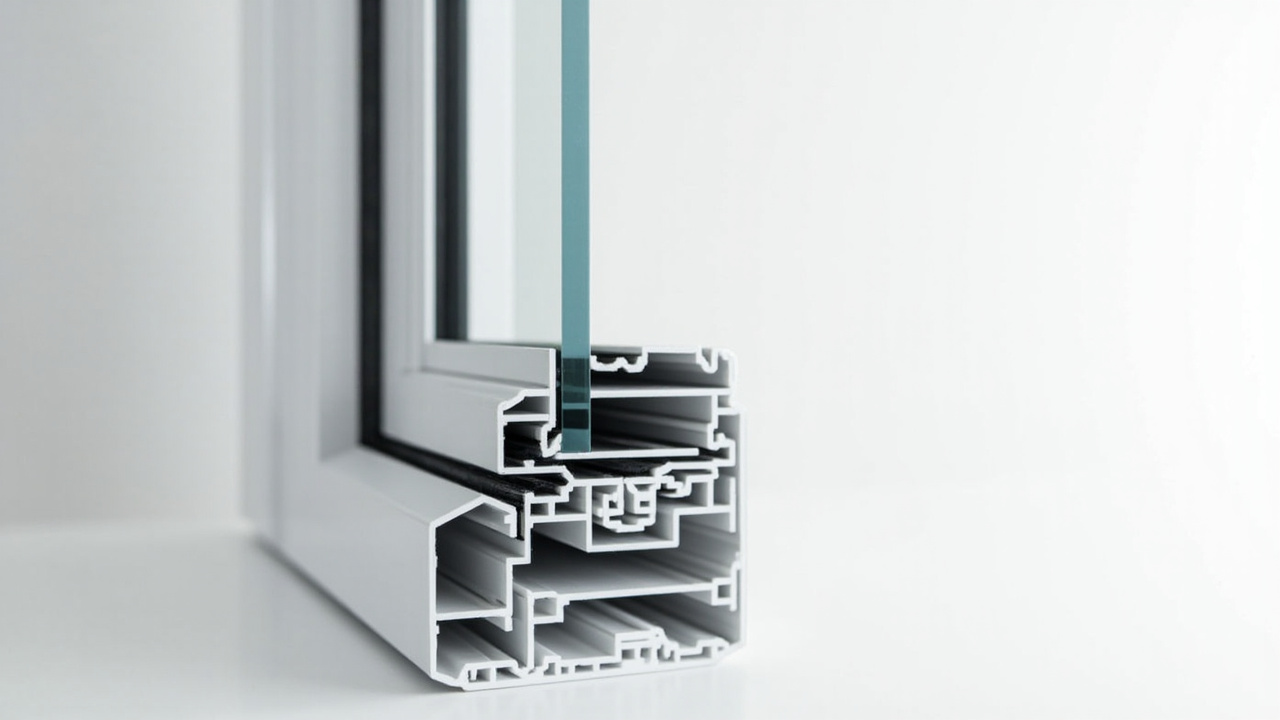
Aluminum is a metal, which means it is strong, slim and inherently conductive. A bare aluminum frame transfers heat and cold rapidly between inside and outside, which is why high-end aluminum windows use a thermal break, a polyamide strut sandwiched inside the profile to interrupt the heat path. uPVC (unplasticized polyvinyl chloride) is a rigid plastic that does not conduct heat well at all, so even a basic uPVC window outperforms a non-thermal aluminum window for insulation without any additional engineering.
The trade-off is structural. Aluminum can be extruded into very slim sightlines that support large panes of glass, which is why it dominates curtain walls and modern minimalist facades. uPVC frames are bulkier and rely on internal steel reinforcement chambers to hold their shape, so they look heavier and span less distance before needing a mullion.
Thermal performance and energy efficiency
Insulation is measured by the U-value, the lower the better. A standard double-glazed uPVC window typically achieves a U-value between 1.2 and 1.6 W/m2K. A non-thermal break aluminum window with the same glass often sits above 3.0, which disqualifies it from many cold-climate building codes. Add a polyamide thermal break and aluminum closes the gap to roughly 1.6 to 2.0, competitive but rarely equal to uPVC at the same price point.
For projects targeting energy certification such as Passivhaus or local equivalents, uPVC is usually the default because the frame itself contributes to the overall performance. In hot climates, both materials benefit from thermal breaks because condensation and heat gain matter as much as heat loss. Specifying low-E glass and argon filling improves the glazing package, but the frame material still caps how efficient the whole window can be.
Cost structure and what drives the price
Raw uPVC window sets exported from China commonly land 15 to 30 percent cheaper than comparable aluminum windows, and the gap widens once hardware is added. The reason is the raw material: aluminum is a commodity metal priced per ton on the LME, and a thermally broken profile requires two extrusions plus a polyamide assembly step. uPVC extrusion is a continuous plastic process with lower energy input, and the internal steel reinforcement is inexpensive.
However, cost is not linear. For very large openings, aluminum stays slim and may allow a single frame where uPVC would need two or three joined units, which can offset the per-meter premium. Color also changes the math. uPVC is cheapest in white, with wood-grain foil lamination adding cost. Aluminum accepts powder coating in virtually any RAL color and textured finish, including anodized effects for premium projects.
Lifespan, maintenance and climate suitability
Both materials last decades when specified correctly, but they age differently. Aluminum is effectively inert, it will not rot, warp or fade noticeably if the powder coat is UV-stable, and it shrugs off salt spray, which makes it the default for coastal and high-humidity projects. uPVC holds up well against moisture too, but in extreme heat (sustained surface temperatures above 60 degrees Celsius) lower-grade formulations can yellow or become brittle, so tropical projects should specify UV-stabilized, lead-free compound with documented weathering tests.
Maintenance is minimal for both. Aluminum needs occasional cleaning and the moving hardware may need lubrication or replacement over a 20-year service life. uPVC benefits from the same hardware care plus attention to the gaskets, which can shrink over time and let draughts in. For repainting, aluminum can be recoated on-site, while uPVC cannot be practically repainted once laminated.
Specification checklist for sourcing from China
When requesting quotations, give the factory enough to price accurately. State the profile system (German-system style references are widely understood in Chinese factories), the wall thickness of the uPVC chamber walls or the aluminum profile (1.4mm is a common minimum for aluminum residential windows), the glass package (single, double, triple, argon, low-E), and the hardware brand tier. For aluminum, explicitly state whether a thermal break is required and the target U-value. For uPVC, ask for the reinforcement steel gauge and whether the compound is UV-stabilized.
Always request a sample corner joint before committing to a container order. The corner shows the cut quality, the weld or mechanical joint, the gasket continuity and the hardware preparation. A clean corner sample is the single best predictor of whether the production run will arrive without alignment problems, and it costs a fraction of what a defective container would cost to replace.
The decision between uPVC and aluminum should follow the project, not the trend. Match the frame to the climate, the building envelope performance target and the design language, then compare like-for-like quotations. When both materials meet the spec, uPVC usually wins on price and insulation, while aluminum wins on slim sightlines, color range and long-term weathering in harsh environments.