





Top 10 Waterproofing Material Manufacturers in China
Waterproofing failure is the most expensive defect to fix in any building, because the leak is hidden inside the structure and the only repair is to dig up the garden, demolish the tile or strip the roof. China makes the full range of waterproofing systems for export, from SBS bituminous membranes for flat roofs and basements to polyurethane liquids for wetrooms and cementitious slurries for tanks and foundations, and the gap between a system that lasts twenty years and one that fails in five is measured in the membrane thickness, the reinforcement and the substrate prep, not in the price per roll. This guide covers the system families, the key specifications and the factory brief that keeps a structure dry.
SBS, APP and the bituminous membrane
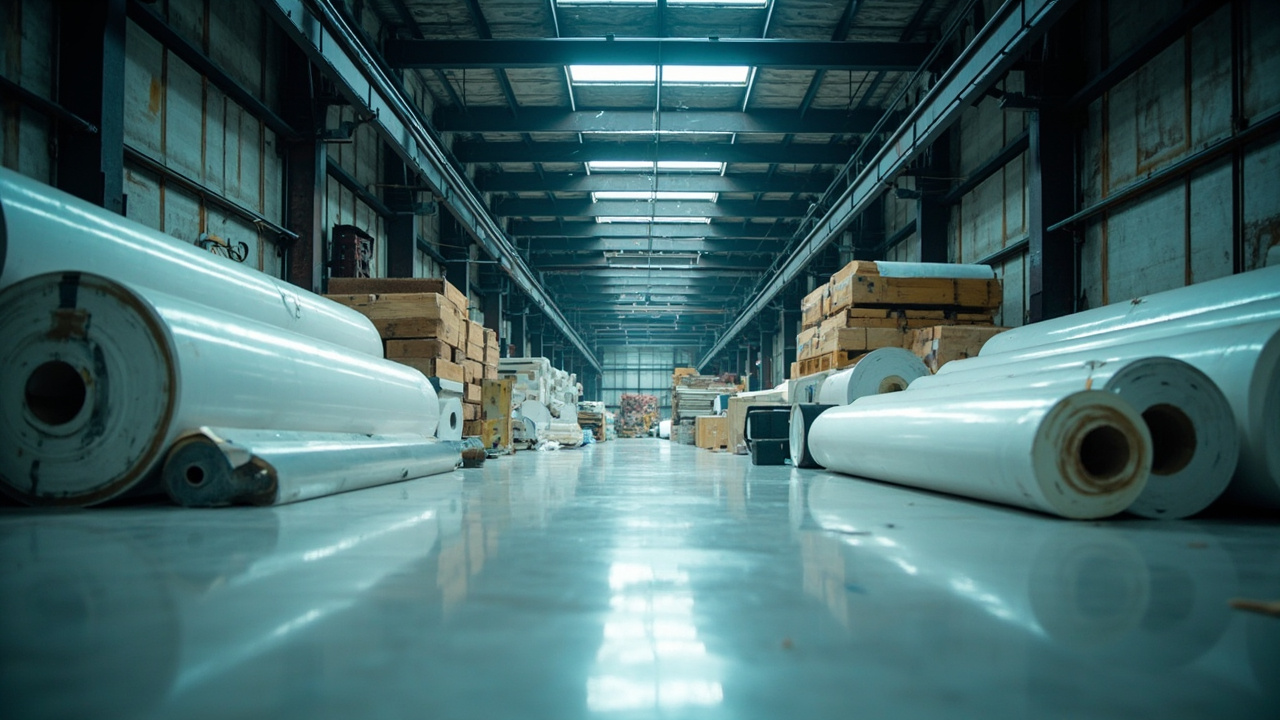
Bituminous membrane is the workhorse of large-area waterproofing and the standard choice for flat roofs, basements and plaza decks. The membrane is a polyester mat impregnated and coated with modified bitumen, surfaced with a mineral granule or a polyethylene film, and supplied in a 10 metre roll about 1 metre wide. Two modifiers change the behaviour of the bitumen: SBS (styrene-butadiene-styrene) makes the membrane flexible down to minus 20 degrees Celsius and is the right pick for cold climates and detail work; APP (atactic polypropylene) makes the membrane stiffer and more UV-stable and is the right pick for hot, exposed flat roofs. Specify the membrane thickness in millimetres (3 to 4 millimetres is the project standard, anything thinner is a budget compromise), the polyester mat weight in grams per square metre (180 to 250 gsm is the project standard, a lighter mat tears at the lap), and confirm the lap width, which should be at least 80 millimetres at the side and 100 millimetres at the end. A torch-on membrane is the most common application; a self-adhesive membrane is the cold-applied alternative for projects that ban open flame on site.
Polyurethane liquid and the seamless coating
Liquid waterproofing answers the problems a membrane cannot, namely complex shapes, multiple penetrations and a roof with no room for a roll. A polyurethane liquid is the premium liquid choice: it cures to a seamless elastomeric film that stretches with the substrate, holds 200 to 400 percent elongation and bonds to concrete, masonry, timber and existing tile; it is the right pick for wetrooms, balconies, green roofs and any substrate with many pipe penetrations. Specify the solids content (60 to 80 percent by weight is the project standard, a lower solids content means more solvent shrinkage and a thinner dry film), the dry film thickness in millimetres (typically 1.5 to 2.0 millimetres in two or three coats), and confirm that the system includes a reinforcing fleece at the corners and the cracks, because a neat liquid job fails first at the joint. An acrylic coating is the cheaper liquid cousin, suitable for light-duty roof waterproofing and reflective top coats; it has lower elongation than polyurethane and is the wrong pick for a working crack.
Cementitious, reinforcement and the wetroom system
Cementitious waterproofing, a blend of cement, sand and active chemicals that is brushed or troweled onto a damp concrete substrate, is the standard for foundations, water tanks and the inside of basement walls where the membrane goes on the negative side of the water. Specify the type (a rigid slurry for stable substrates, a flexible one- or two-component system for substrates that may crack), and confirm the crack-bridging ability in millimetres, because a rigid slurry on a working crack is a guaranteed leak. For a wetroom, the system that actually works is a polyurethane or flexible cementitious membrane applied over a primed and slope-correct substrate, reinforced with a fleece at the wall-floor junction and the drain, and protected by a fall screed and the tile above; the membrane alone is never enough and the reinforcement at the junction is the small detail that decides whether the shower leaks next year or in twenty years. For positive-side basement waterproofing, a bentonite geosynthetic clay liner is a useful alternative to a bituminous membrane because it self-seals small punctures on contact with water.
Substrate prep, MOQ and the order
A waterproofing system is only as good as the substrate it sits on, and the most common cause of failure is not the material but the prep: a dusty slab, a wet screed or a sharp aggregate that punctures the membrane. Send your shortlisted three factories the same brief: the project type (roof, basement, wetroom, tank), the substrate type and condition, the exposure (buried, exposed, planted), the expected service life, the local code, and the project area in square metres. Ask for a paid sample of a full roll or a full kit, plus the test certificate for the membrane thickness, the elongation and the tensile strength. When the sample arrives, check four things: the measured thickness of the membrane with a caliper at three points, the flexibility of the membrane at the project temperature (a cold-bend test), the weight of the polyester mat, and the smell and the solids content of the liquid. Negotiate on the technical support and the warranty: a factory that ships a system with a printed method statement, a video call with the site team, and a 10-year material warranty is worth the small price premium, because a leak on a finished roof is a six-figure repair.
The right waterproofing manufacturer for a project is the one whose system family, membrane thickness, reinforcement and technical support match the project substrate and the service life. The ten factories in this category cover the full spectrum from volume SBS membrane to specialty polyurethane liquids and cementitious slurries, so the buyer job is to match the application and the substrate to the factory specialism, then validate the thickness and the elongation with a paid sample and a test certificate before the bulk order.