





Top 10 Toilet Manufacturers in China
A toilet is the most-used fixture in any building, and its engineering is almost entirely hidden. The glaze chemistry, the flush rim design, the trapway geometry and the firing temperature decide whether a unit stays clean with a single flush, or whether it stains, dribbles and cracks within a year. China produces around two-thirds of the world's ceramic toilets, concentrated in Chaozhou (Guangdong), Tangshan (Hebei) and Foshan, but the gap between a unit that runs twenty years and one that fails after a season is measured in firing temperature, glaze thickness and flush rim design. This guide sorts the export-grade factories into ten archetypes so a specifier can match a supplier to the room.
What defines an export-grade toilet factory
Four numbers tell most of the story. The firing temperature: a toilet fired at 1200 to 1280 degrees Celsius for 12 to 18 hours, which vitrifies the clay and gives the ceramic its water absorption under 0.2 percent. The glaze: a self-cleaning nano-glaze applied to the bowl interior, with a thickness of 0.8 to 1.2 millimetre, that resists staining. The flush system: a siphonic flush (3 to 4.5 litre per flush) with a fully glazed 50-millimetre trapway, against a washdown flush for the European market. The rim: a rimless bowl design (no hidden rim channel) for the modern hygiene standard, against a boxed-rim for the budget market.
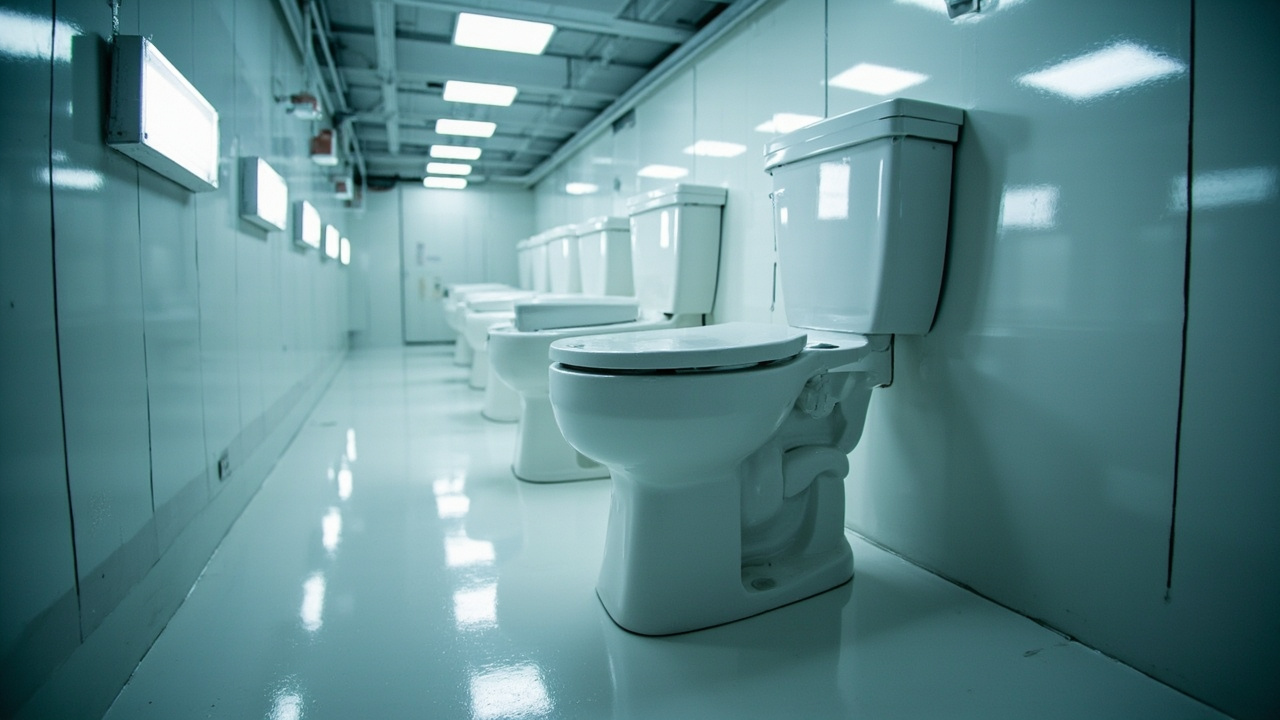
The integrated ceramic groups
At the top sit vertically integrated groups that prepare their own clay body, glaze and slip, fire their own kilns (tunnel or shuttle), and machine their own moulds. They produce the complete range from a one-piece, two-piece and wall-hung to a smart toilet, and they hold UPC, WaterSense, CE and CUPC certifications. These are the default partners for hotel chains, developer projects and large residential jobs where uniformity across hundreds of units and warranty back-up are non-negotiable.
The rimless and siphonic specialists
A focused archetype is the rimless siphonic specialist. The bowl has no rim channel, so the flush water washes the entire inner surface (no hidden corners for bacteria) and the siphonic trapway creates a quiet, powerful flush. The craft is in the bowl geometry (a precisely calibrated trapway for a clean siphon) and in the glaze (a full coverage of the trapway interior, so waste does not stick). They are the right call for premium hotel bathrooms, for modern residential briefs, and for any project where hygiene and water efficiency are written into the spec.
The wall-hung and concealed-cistern specialists
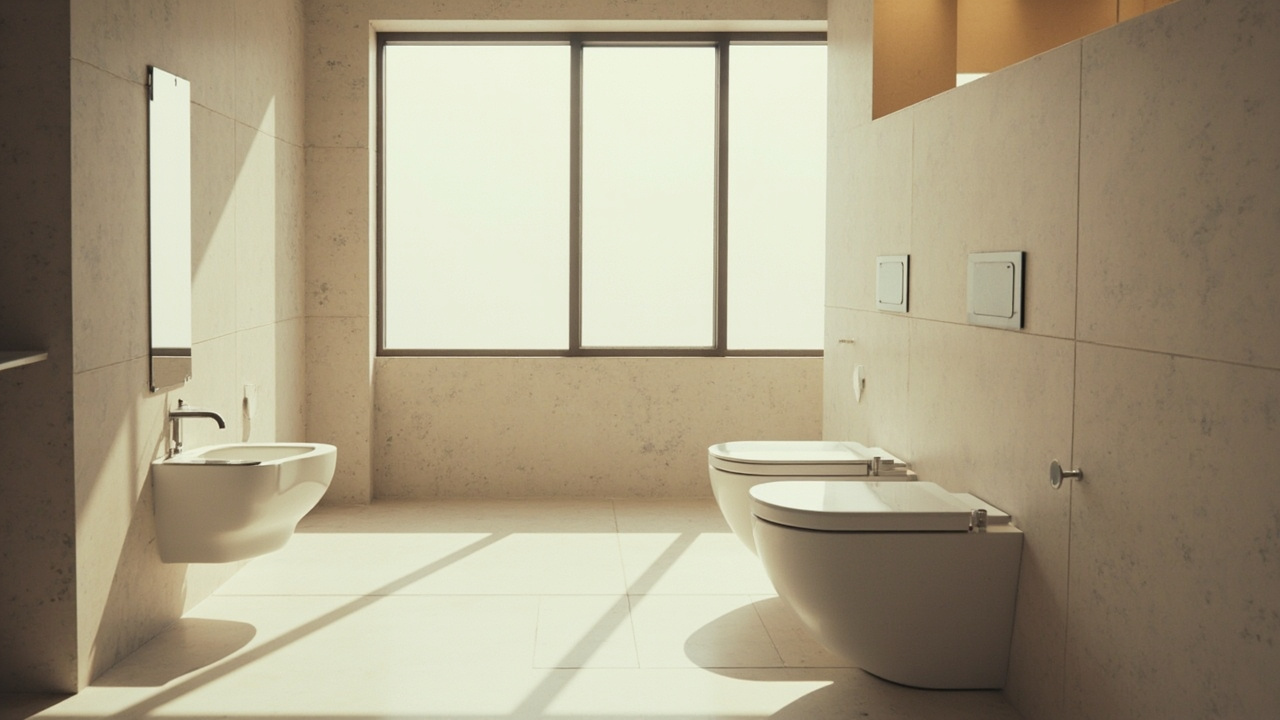
Another archetype specialises in wall-hung toilets and concealed-cistern systems. The product is a bowl hung off a carrier frame inside the wall, with the cistern and all plumbing hidden behind a flush plate. The craft is in the carrier (a steel frame rated to 400 kilograms of load, tested to 100 000 cycles) and in the cistern (a quiet fill, a dual-flush mechanism, an overflow protection). They are the right call for the design-led residential and boutique hotel segment, where the floor-to-wall line must be clean and the cleaning access under the bowl must be unobstructed.
The smart toilet specialists
A focused tier produces smart toilets with an integrated seat. The unit combines the bowl, a heated seat (28 to 40 degrees Celsius), a bidet wash (rear and feminine, with adjustable water temperature and pressure), a warm-air dryer, a deodoriser and a motion-activated open-and-close lid. The craft is in the electronics (an IPX4 water-resistant control board), the water heater (an instantaneous heater with no stored water) and the sensor (a reliable microwave or infrared presence sensor). They are the right call for the premium residential and wellness market, and for hotels that want to differentiate on bathroom experience.
How to qualify a toilet supplier
Before requesting prices, send the rough-in dimension (the distance from the wall to the centre of the waste outlet, typically 305 or 400 millimetre), the bowl shape (elongated or round), the flush system (siphonic or washdown), the rough plumbing type (S-trap, P-trap or wall outlet), the certification required (UPC, WaterSense, CE, CUPC), and the quantity. Ask for the firing certificate (temperature and time, with water absorption test report under 0.2 percent), the glaze spec (nano-glaze, with thickness report), the flush performance report (grams of waste removed in a single flush, target 500 grams plus), the trapway glaze coverage certificate and a sample unit. Test the sample: weigh it to confirm vitrification (a two-piece should be 38 to 45 kilograms, a one-piece 40 to 50 kilograms), drop a permanent marker into the bowl, leave it for an hour and flush to check the stain removal, flush 10 table-tennis balls in a single flush to check the siphon power, and fill the trapway with a dye solution and check the rim for leaks. Then shortlist two factories of different archetypes and decide on firing temperature and flush system rather than on the unit price. Sourcing toilets direct from China still saves 30 to 50 percent against a regional distributor, but only when the buyer treats the firing temperature, the glaze and the flush performance as the three non-negotiables.