





Top 10 Stone Vessel Sink Manufacturers in China
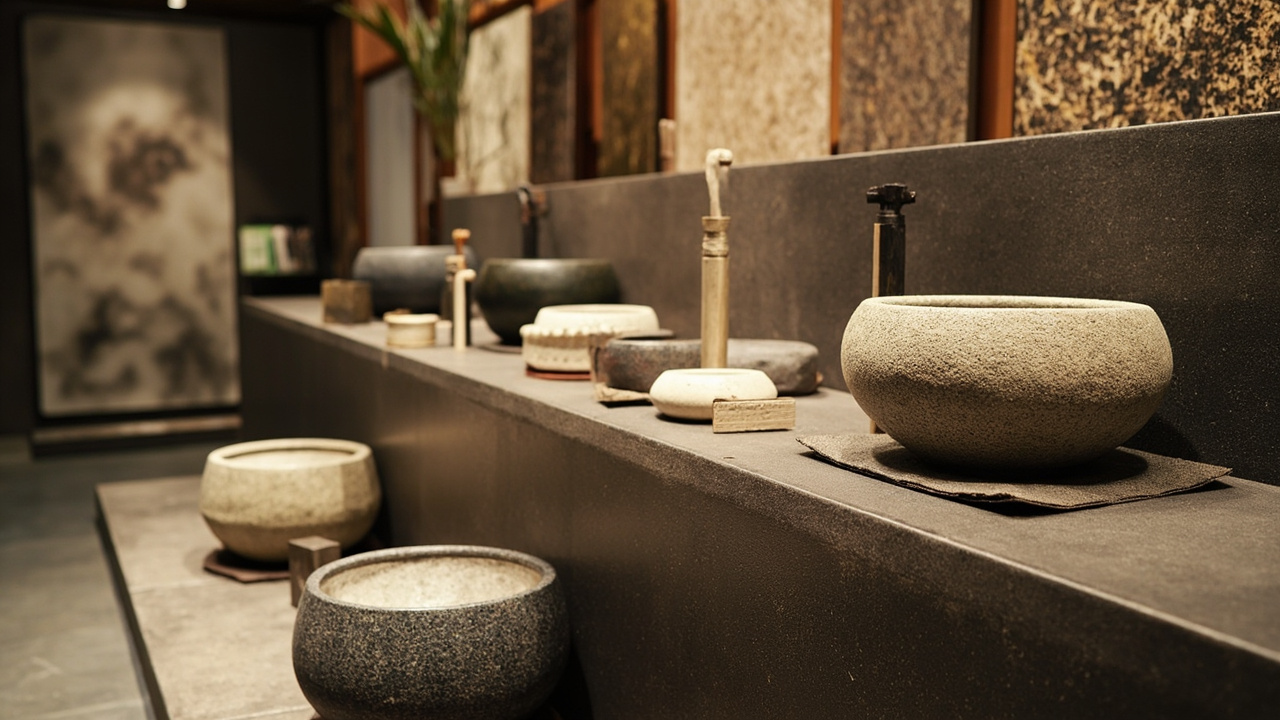
A stone vessel sink is a sculptural object that also has to drain, and the gap between a unit that holds its polish for a decade and one that stains, etches and cracks within a year is measured in stone selection, surface finish and drain engineering. China is the largest single source of stone vessel sinks in the world, concentrated in Yunfu (Guangdong) for marble and granite, Xiamen (Fujian) for export and Shuitou for blocks, but the export market is full of cheap sinks carved from off-grade blocks. This guide sorts the export-grade factories into ten archetypes so a specifier can match a supplier to the brief.
What defines an export-grade stone sink factory
Four numbers tell most of the story. The stone: a block selected for low porosity (water absorption under 0.2 percent for marble, under 0.1 percent for granite), with no fillers in the polished face. The carving: a single-piece carve from a solid block (not a built-up assembly), with a basin wall of at least 20 millimetre for strength. The finish: a polished face at 80 to 95 on a glossmeter, against a honed or leathered finish for a softer look. The drain: a recessed drain hole with a stainless or brass insert, drilled to match the buyer's pop-up or click-clack drain.
The integrated block-and-carve groups
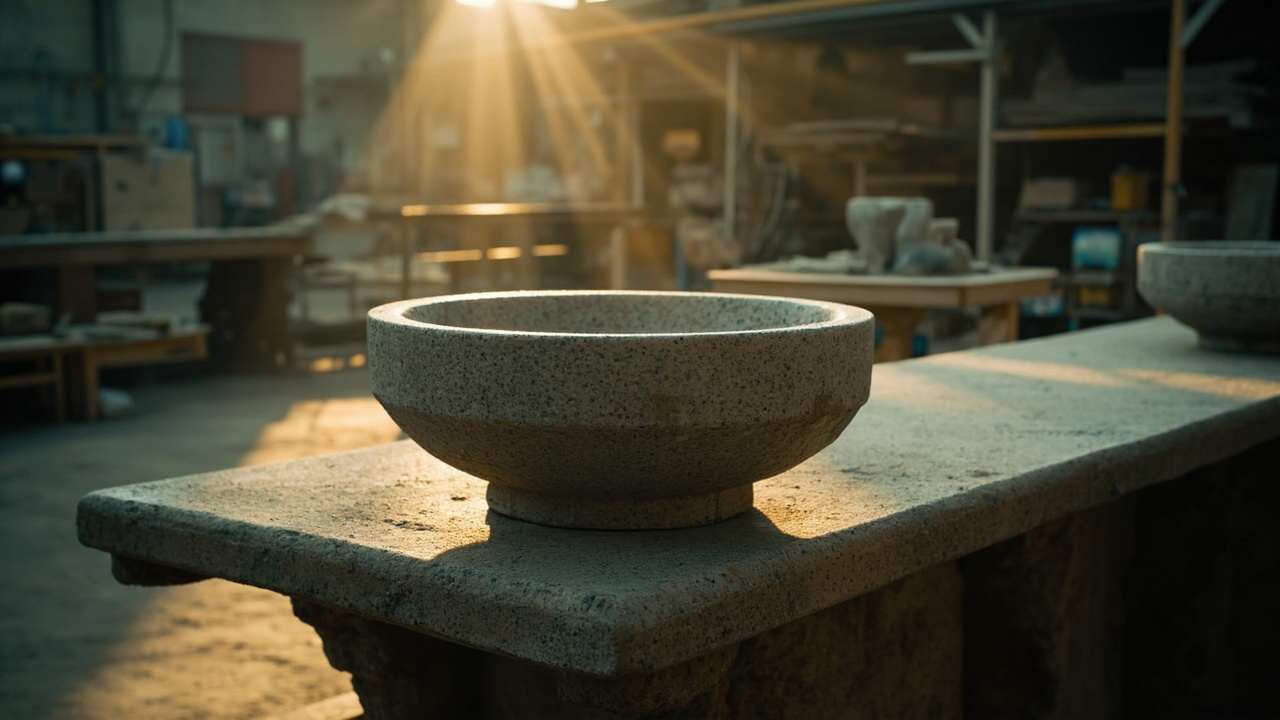
At the top sit vertically integrated groups that import their own blocks (Italian Carrara, Turkish Afyon, Indian Paradiso, African Angola Black), carve their own sinks on CNC and manual lathes, and run their own polishing lines. They produce the full range of shapes (round, oval, square, rectangular, asymmetrical) in the full range of stones, and they hold CE, NSF and UPC certifications for the drain assembly. These are the default partners for hotel groups, luxury residential developers and resort projects where the sink is a focal point and warranty back-up is required.
The marble and onyx specialists
A focused archetype specialises in marble and onyx. Marble (Carrara, Calacatta, Crema Marfil) and onyx (Honey Onyx, White Onyx) give the strongest decorative effect, with veins and, for onyx, a translucency that lights up when backlit. The craft is in the block selection (an even vein pattern across the sink, no resin-repaired cracks on the polished face) and in the carving (a basin shape that flatters the vein, not cut against it). They are the right call for the luxury hotel bathroom, the master ensuite, and any project where the sink is meant to be the centrepiece.
The granite and basalt specialists
Another archetype specialises in granite and basalt. Granite (Absolute Black, Paradiso, Baltic Brown) and basalt (Nero Angola, Bluestone) give the strongest durability, with a hardness on the Mohs scale of 6 to 7, against 3 to 4 for marble. The craft is in the surface finish (a flamed or brushed finish for a textured look, against a polished finish for a formal look) and in the sealing (an impregnating sealer applied before shipment, to be re-applied annually). They are the right call for a wet-room, a spa, a resort bathroom and any project where the sink takes daily use and a softer stone would etch.
The travertine and sandstone value producers
A broader tier works in travertine and sandstone, the warmer, softer stones that give a Mediterranean feel. The unit cost is lower, the colour range is wide (beige, walnut, silver), and the surface finish is typically honed (not polished). The craft is in the filling (travertine naturally has voids, which must be filled with a matching resin or grout before the sink is shipped). They are the right call for a resort bathroom, a Mediterranean villa, and a budget project where the warm-stone look is the brief.
How to qualify a stone sink supplier
Before requesting prices, send the stone required (named, with a reference image), the basin shape and dimensions, the drain size and type (1-1/4 inch pop-up, click-clack, grid), the finish (polished, honed, leathered), the quantity, and the destination (for crate and packing spec). Ask for the stone certificate (quarry name, water absorption test report), the carving certificate (single-piece carve, basin wall thickness named), the finish glossmeter reading (80 to 95 for polished), the drain fit certificate (a pop-up or click-clack drain test), the sealer application record, and a sample sink. Test the sample: weigh it to confirm density (a 400-millimetre round marble sink should be 16 to 22 kilograms), measure the basin wall thickness at three points, run the tap for ten minutes and check the drain for flow and the underside for leaks, place a lemon wedge on the polished face for an hour and wipe it off to check for etching, and turn the sink over and inspect the underside for resin repairs. Then shortlist two factories of different archetypes and decide on stone grade and carving craft rather than on the unit price. Sourcing stone sinks direct from China still saves 30 to 50 percent against a regional distributor, but only when the buyer treats the stone grade, the carving and the drain fit as the three non-negotiables.