





Top 10 Staircase Manufacturers in China
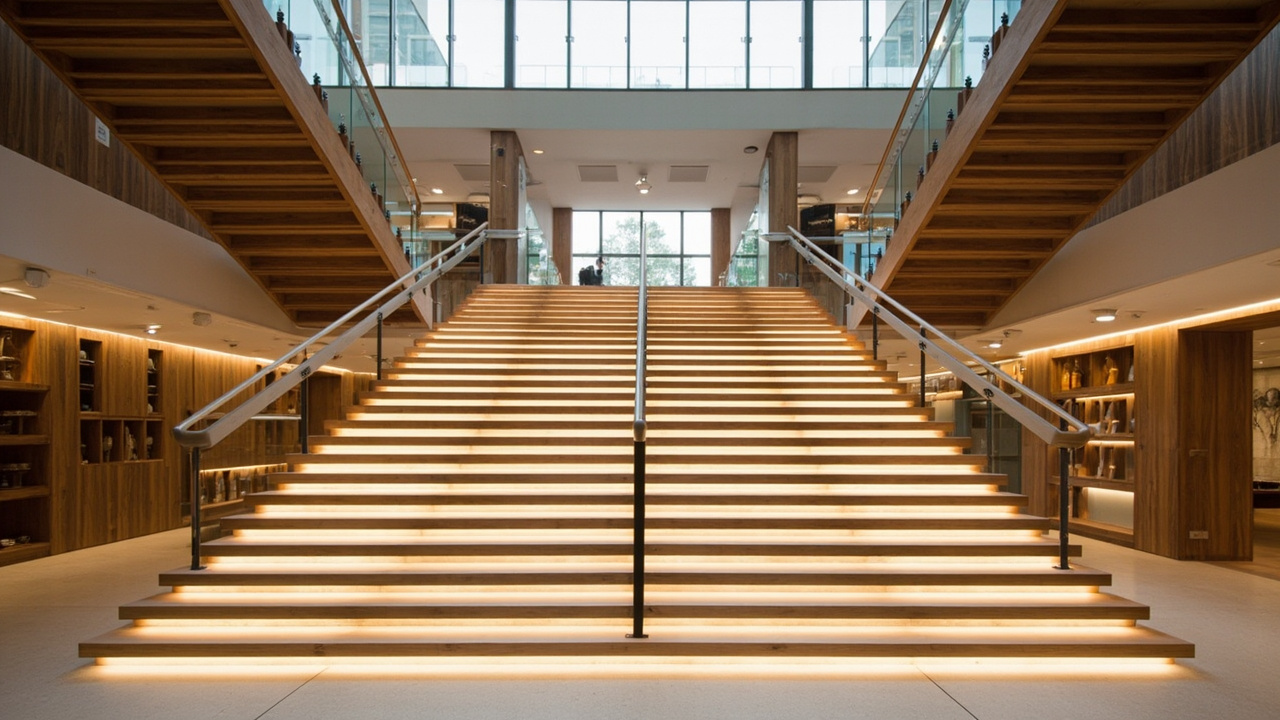
A staircase is one of the few building components that must work as both a structural beam and a piece of furniture, carrying the live load of a dozen people while looking intentional in a finished room. China has built up a strong export industry across every staircase type, from straight solid-wood runs for villas to floating cantilever and spiral centre-pole stairs for boutique projects, and the gap between a competent factory and a marginal one shows up fast at installation, in treads that creak, treads that flex, and railings that miss the wall by twenty millimetres. This guide covers the design choices, the structural questions and the brief that turns a drawing into a delivered and installed staircase.
Wood treads, glass and the structural choice
The first decision is the structural system, because everything else, the tread material, the railing and the cost, follows it. A stringer staircase, where the treads sit on a pair of steel or wood side beams, is the standard for residential and hospitality work and is forgiving of minor site variation. A cantilever staircase, where each tread is fixed only to the wall, is the architect favourite for modern interiors but demands a structural wall prepared by the builder and a precise engineering calculation per tread, because a weak fixing will flex visibly under load. A spiral staircase wraps around a single centre pole and is the choice for tight spaces, but its narrow treads make it unsuitable as a main family stair in most codes. On the tread material, solid wood remains the premium choice; specify the species (red oak, American walnut and beech are the common exports), the board construction (full stave versus finger-jointed laminated, where full stave looks richer and laminated is more stable), and a thickness of at least 40 millimetres to stop the tread feeling bouncy.
Railing, baluster and the finish details
The railing is what most users actually touch, so the finish and the fixing matter more than the material. Glass balustrades, usually 12 or 15 millimetre tempered laminated glass, are the contemporary choice and need a precision kerf channel or stainless steel posts; specify that the glass carries a tempered mark and a laminated interlayer, because unmarked glass is a code failure in most markets. Stainless steel balusters, in grade 304 for interiors and grade 316 for coastal exteriors, are the workhorse of hospitality stairs and pair well with a wood top rail. The top rail itself, whether solid wood, stainless or a wood-look aluminium, should run the full length without a visible joint, which is a finishing test that sorts the better factories from the cheaper ones. On paint and clear-coat finishes, insist on a UV-cured lacquer on the wood (it resists heel marks and water rings) and a brushed or mirror polish on the stainless specified for the project exposure.
Engineering, packing and shipping long items
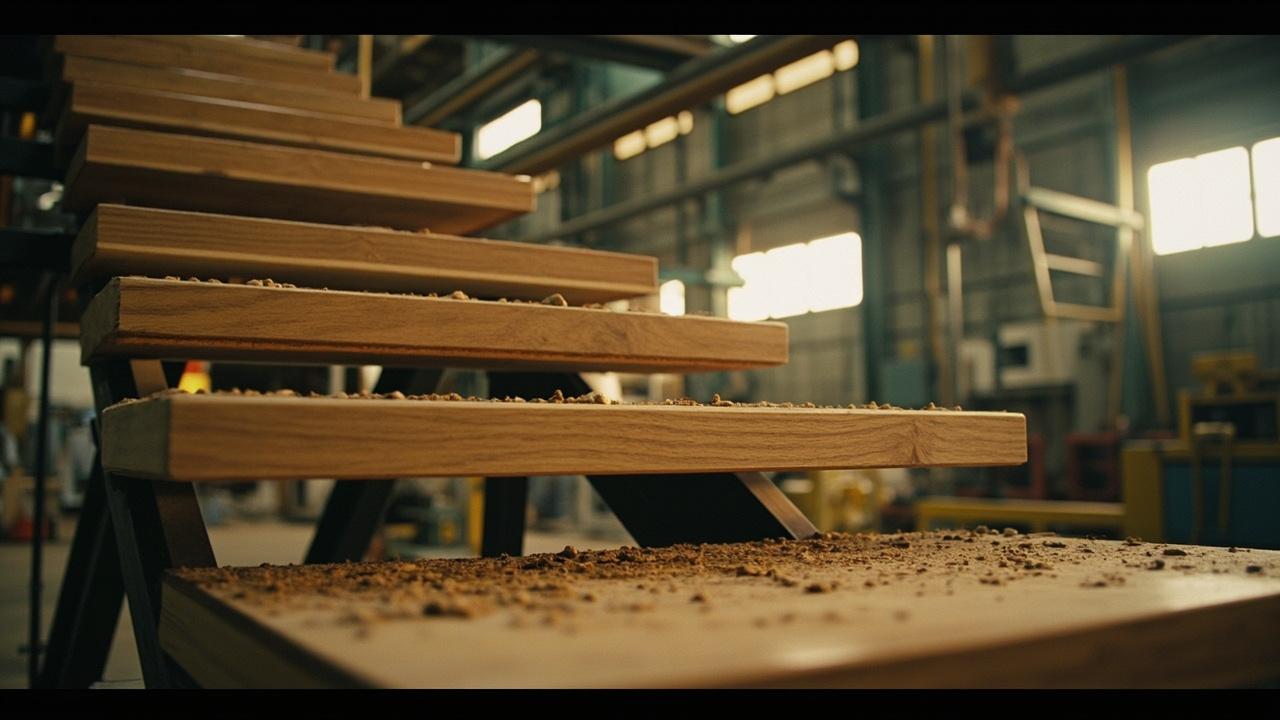
A staircase is one of the hardest items to ship because the treads and the stringers are long, heavy and awkward, and a poor pack arrives scratched or broken. The serious factory supplies a full set of shop drawings stamped by a structural engineer, with each tread load-rated and each wall fixing specified for the project wall type, whether concrete, block or stud. Confirm the wall fixing kit, because a cantilever stair on a drywall partition will fail and the factory needs to flag this in the drawing review. For packing, a competent factory cradles each tread in foam within a timber-frame crate, separates the glass in its own crate with timber dividers, and straps the stringers to pallets with edge protectors. Ask for the packed dimensions and the gross weight per crate before you book the container, because long stair crates often need a 40-foot high-cube rather than a 20-foot container and the freight quote changes accordingly.
The installer brief and the order
Most export staircases ship ready-to-assemble with the treads pre-drilled and the steelwork pre-finished, so the installer job is assembly not fabrication. Send your shortlisted three factories the same package: the floor-to-floor height, the floor opening dimensions, the structural wall type, the preferred design (stringer, cantilever, spiral), the tread species and finish, the railing type, and the project country for code compliance. Ask for a paid sample of one tread and one baluster in the specified finish, plus the full shop drawing set. When the sample arrives, check four things: the smoothness of the tread surface and edge radius, the lacquer hardness under a fingernail test, the colour match between the wood sample and the catalogue photo, and the weight of the steel baluster, which tells you the wall thickness. Negotiate on the installation support: a factory that ships an installation manual, a video call with the site team, and a set of spare touch-up lacquer and fixings is worth a small price premium, because a stair is fitted once and a callback is expensive.
The right staircase manufacturer for a project is the one whose structural system, tread material, railing finish and engineering match the building and the installer capability. The ten factories in this category cover the full spectrum from volume straight-run wood stairs to bespoke glass and cantilever showpieces, so the buyer job is to match the project design to the factory specialism, then spend on a sample and a drawing review before committing to the full order.