





Top 10 Solar Panel Manufacturers in China
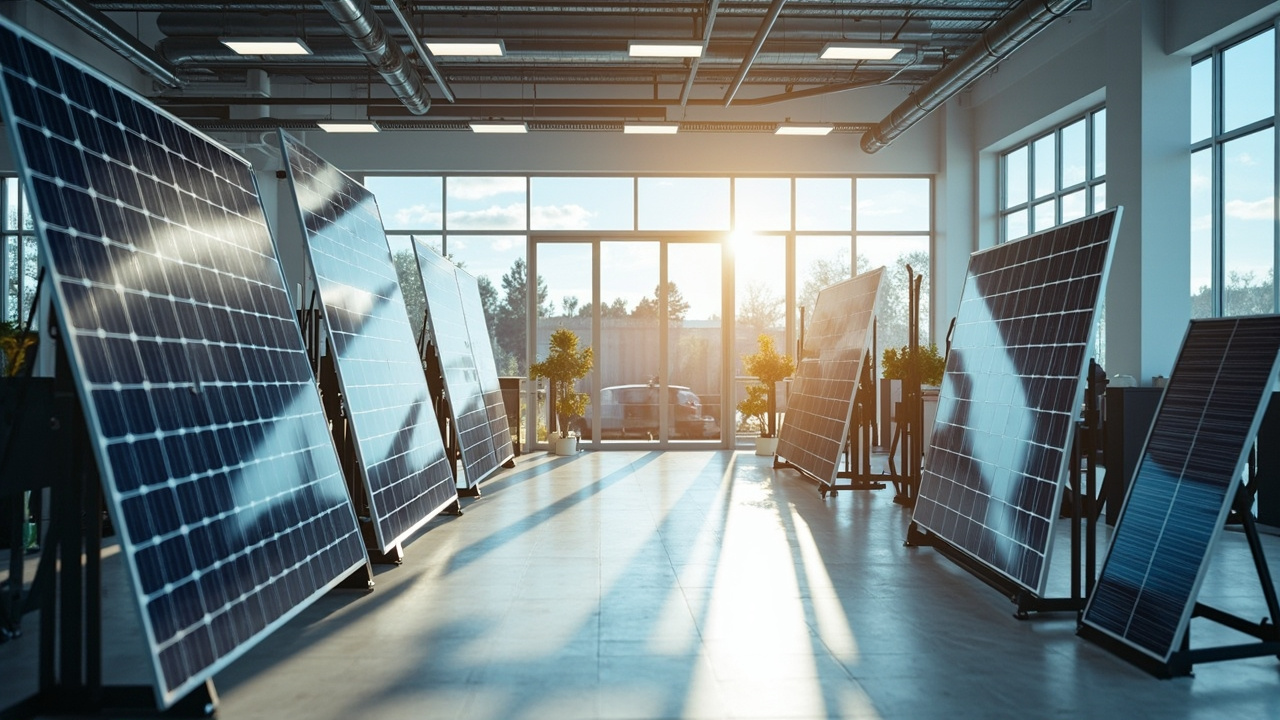
China now accounts for roughly four out of every five solar modules produced worldwide, so any serious sourcing project sooner or later ends up on a factory floor in Jiangsu, Zhejiang or the Yangtze River Delta. The challenge is not a shortage of capacity but the opposite: hundreds of fabs claim Tier-1 status, and a project buyer needs a disciplined way to separate genuine vertically integrated producers from assembly shops that buy cells on the open market. This guide walks through the ten manufacturer groups that consistently appear on bankability lists, then explains how to compare them on the criteria that matter for a real procurement decision.
What separates a Tier-1 solar factory from a re-badger
Bankability rankings such as the Bloomberg list, the PV ModuleTech rating and the BNEF Tier-1 list all reward the same underlying traits. A genuine Tier-1 producer owns its wafer, cell and module lines, has shipped at least one gigawatt of capacity in the previous two years, and carries product and performance warranties backed by a balance sheet large enough to honour them. Re-badgers, by contrast, assemble cells bought from third parties and cannot guarantee the same traceability or power tolerance. When a quotation lands in your inbox, ask for the factory address, a recent third-party audit report and the bill of materials that identifies the cell origin.
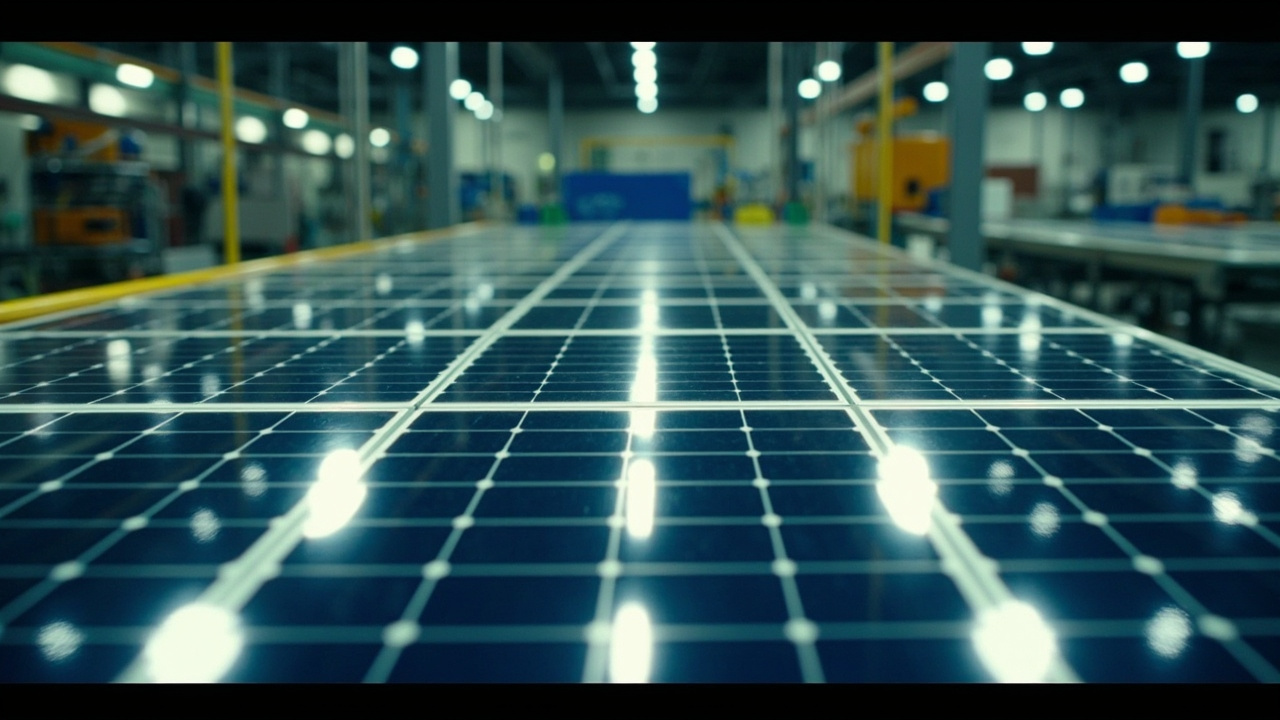
The ten manufacturer groups worth shortlisting
The first cluster is built around LONGi Green Energy, the world largest monocrystalline wafer and module maker, followed by JA Solar and Trina Solar, the three names that dominate utility-scale tenders. Each of them offers Hi-MO, DeepBlue and Vertex platforms respectively, with wattages ranging from 540 W up to 720 W for the latest bifacial modules. The second cluster groups JinkoSolar, Canadian Solar and Risen Energy, all strong exporters with established service networks in Europe, Latin America and Africa. The third cluster covers Chint (Astronergy), Seraphim, Hanwha Q Cells joint operations and Yingli-era successors such as Akcome and GCL, which are competitive on price for distributed rooftop and off-grid systems. Together these ten groups cover the full spectrum from premium bankable modules to value-driven options.
Comparing cell technology and wattage
Polycrystalline modules have all but disappeared from new project pipelines, so the real comparison is between PERC, TOPCon and HJT architectures on a monocrystalline wafer. PERC remains the workhorse for cost-sensitive rooftop jobs with efficiency around 21 percent, while TOPCon pushes toward 22.5 percent and now commands the mainstream for utility projects above 5 MW. Heterojunction (HJT) sits at the premium end with efficiency above 23 percent and a lower temperature coefficient, which matters in hot climates where panel yield drops sharply above 25 degrees Celsius. Ask the sales engineer for the flash-test report and the temperature coefficient, not just the nameplate wattage, because two 550 W modules can deliver very different kilowatt-hours per installed kilowatt-peak.
Beyond the cell: glass, frame, junction box and certifications
The cell is only one variable. A durable module needs 3.2 mm or thinner tempered front glass with high transmittance anti-reflective coating, a 30 mm or 35 mm anodised aluminium frame rated for snow and wind loads up to 5400 Pa, and a junction box rated IP68 with at least three bypass diodes. Bifacial modules add a transparent back sheet or dual-glass construction that lifts energy yield by five to twenty five percent depending on ground albedo. On the certification side, IEC 61215 and IEC 61730 are the non-negotiable baseline, and most destinations add CE for Europe, UL for North America, or local marks such as INMETRO for Brazil. For projects financed by a bank, salt-mist and ammonia resistance (IEC 61701 and IEC 62716) are frequently required.
Negotiating MOQ, price and lead time
For the top-tier brands, a full container is the practical minimum order: roughly 600 modules for a 40-foot high-cube or 28 to 30 pallets. Pricing is quoted per watt-peak and is openly indexed against the spot polysilicon market, so locking a price for 60 days requires a written agreement rather than a chat message. Lead time for standard black-frame modules sits at two to four weeks during normal seasons and stretches to eight weeks when the industry enters a capacity squeeze. Always request a production plan, a photo of the laser-etched serial number on the first module off the line, and an EL (electroluminescence) image to verify no micro-cracks were introduced during lamination. With these checks in place, sourcing from a top-ten Chinese solar manufacturer becomes a predictable, repeatable process rather than a leap of faith.