





Top 10 Quartz Slab Manufacturers in China
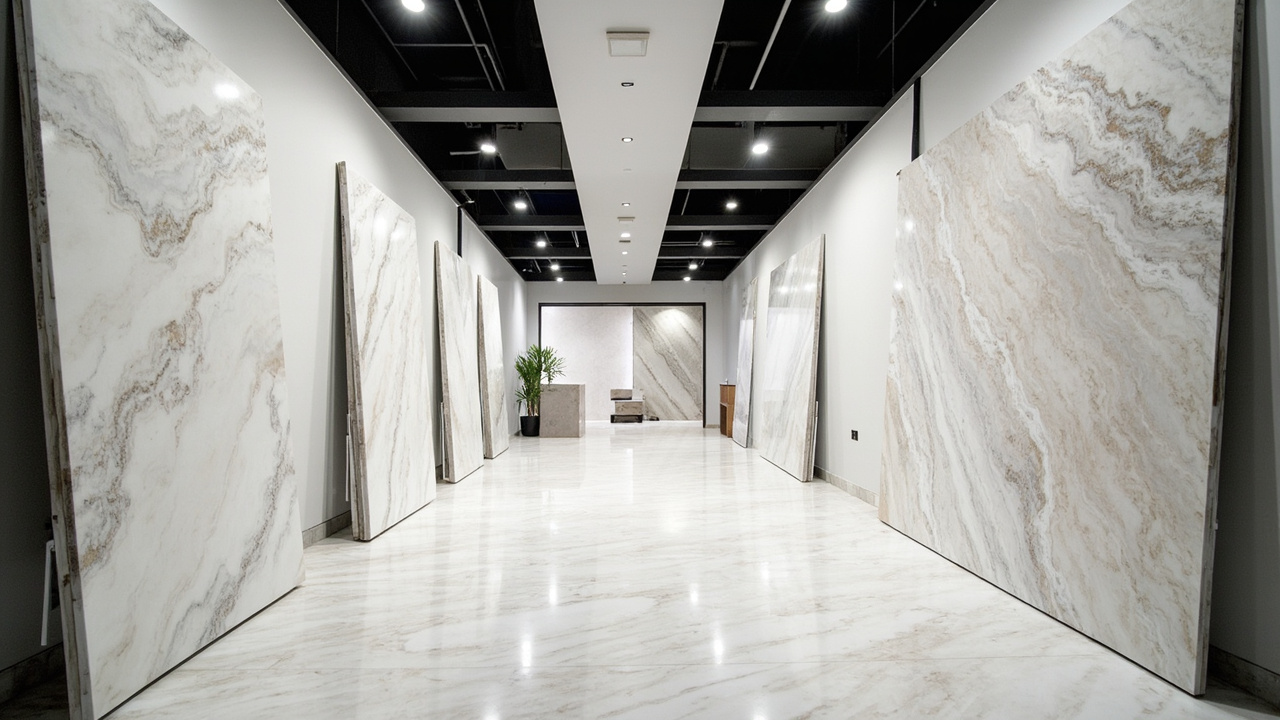
Engineered quartz has overtaken granite as the default countertop material in many markets, and China is now the world's largest producer of the slab. Walk into any stone fair and you will see hundreds of booths claiming quartz expertise, yet the difference between a slab that stays glossy for fifteen years and one that etches and discolours is locked into the press, the resin and the curing. This guide maps the ten types of factory a real buyer meets, organised by the technology they actually run.
What defines a top-tier quartz factory
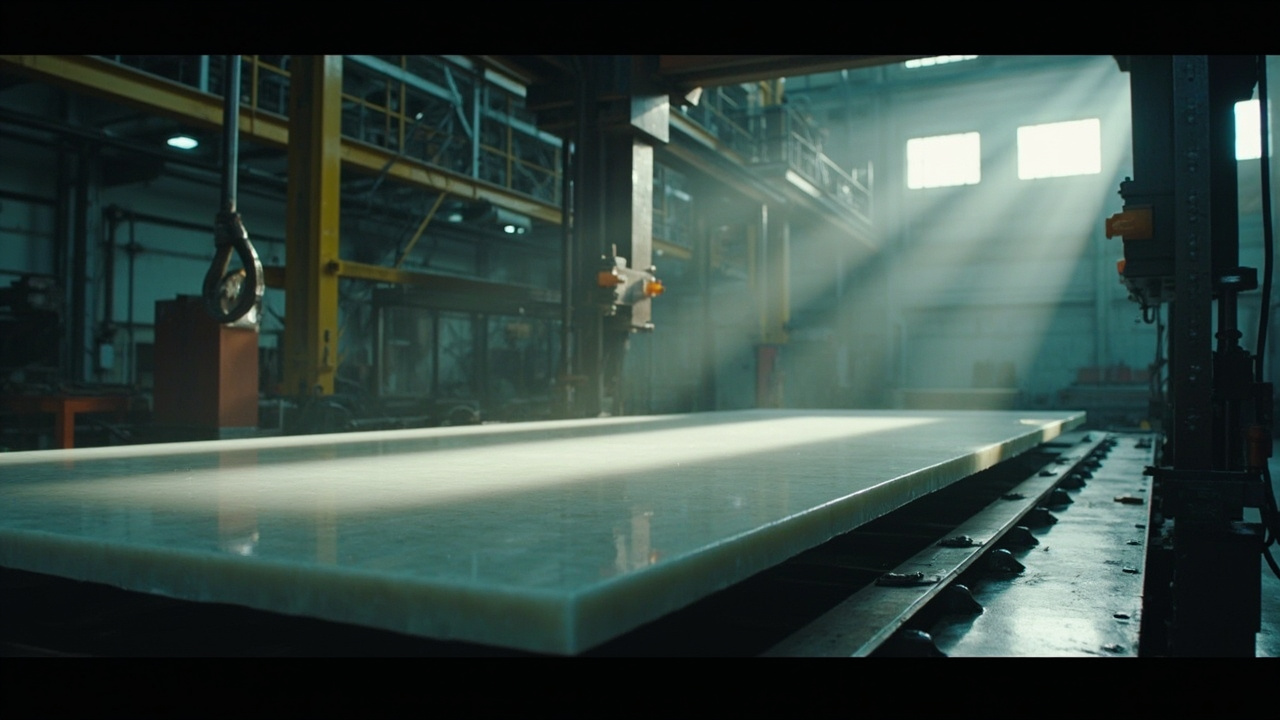
Four things separate a serious producer from a shed with a vibrator. The press: only a Bretonstone system (or its licensed equivalent) achieves the vacuum-and-vibration compaction that gives quartz its density and its near-zero water absorption. The resin: a premium polyester or acrylic resin dosed at six to eight percent, fully cured in a kiln at 85 degrees for forty minutes. The quartz sand: 90 to 93 percent natural quartz of controlled grain size, sourced consistently so colours do not shift between batches. The polishing line: Italian Breton or Gaspari heads that hold a tight gloss level across a 3200 by 1600 slab.
The integrated Breton-equipped groups
At the top of the industry sit a handful of groups that bought the original Bretonstone licence and run the complete line: batching, vibration under vacuum, kiln curing, cooling and polishing. They produce slabs up to 3200 by 1600 millimetres and 3200 by 1900 in jumbo, hold NSF, Greenguard and CE certifications, and export to North America, Europe and the Gulf. These are the partners for hotel and residential projects where the same colour must run across hundreds of kitchens without visible batch variation.
The jumbo and super-jumbo specialists
A second tier is built around the demand for very large slabs that allow seamless islands and feature walls. These factories run 3200 by 1600 and 3200 by 1900 presses, sometimes larger, and they specialise in the logistics of handling a 350-kilogram panel without breakage. Sourcing jumbo slabs requires a freight quote that accounts for the A-frame crate, the fragile surcharge and the forklift capacity at the destination warehouse.
The colour and design studios
Some factories make their reputation on design rather than on volume. They run the full Breton line but invest heavily in the colour laboratory: veined patterns that mimic Calacatta marble, flecked patterns that mirror natural granite, and bookmatched pairs where two consecutive slabs mirror each other for a feature wall. Minimum order quantities are higher because each colour batch is mixed individually, but the result is a slab that looks bespoke rather than catalogue.
The calacatta and marble-look specialists
A focused sub-category produces only the high-contrast veined patterns that imitate Italian marble. The veining is achieved through a resin-rich vein injection system that runs the pigment through the slab before vibration, producing a three-dimensional vein that reads like natural stone. These factories command a price premium and are the right call for luxury retail, hotel lobbies and penthouse kitchens where the slab is the centrepiece of the room.
How to qualify a quartz supplier
Before requesting prices, send a brief with the destination country, the target colours, the slab size (standard 3200 by 1600, jumbo 3200 by 1900, or custom cut-to-size), the thickness (usually 20 or 30 millimetres) and the quantity per project. Ask for the NSF certificate (food contact safe, mandatory for US kitchens), the Greenguard Gold certificate (low VOC, mandatory for schools and hospitals), the resin content test report and a 100 by 100 millimetre sample of each colour. Test the sample: weigh it to confirm density (around 2.4 grams per cubic centimetre), drag a steel key across the surface to check scratch resistance, and leave a drop of lemon juice for an hour to confirm stain resistance. Then shortlist two factories of different archetypes and decide on quality and warranty rather than on the per-slab price. Sourcing quartz slabs direct from China still saves 35 to 50 percent against buying through a local fabricator, but only when the buyer treats the press, the resin and the certificate as the three pillars of the decision.