





Top 10 LED Lighting Manufacturers in China for Commercial Projects
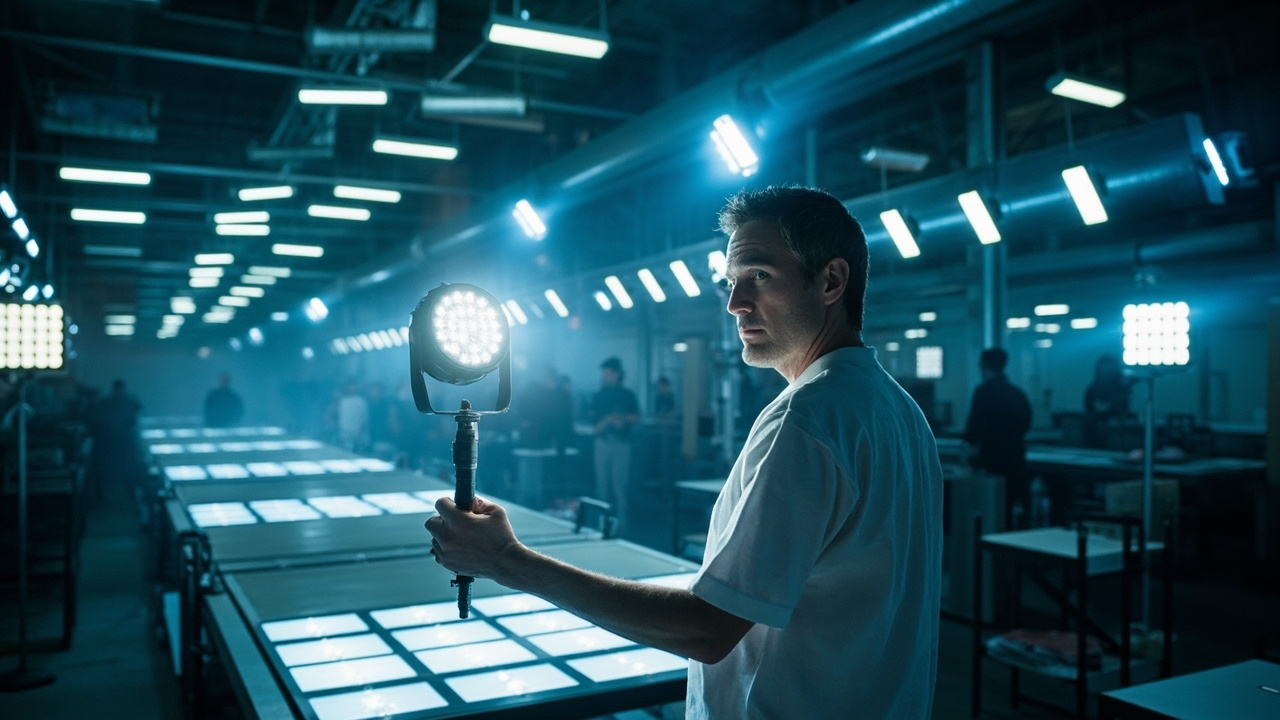
LED lighting is the category where Chinese factories have rewritten the global price book. A track light that cost three hundred dollars in 2012 now leaves a Shenzhen workshop for thirty, yet the gap between a fixture that survives ten years of continuous burn and one that fades in eighteen months is measured in chips, drivers and thermal design. This guide sorts the export-grade producers into ten archetypes so a specifier can match a supplier to a hotel, retail or office brief without falling for a polished brochure.
What defines an export-grade LED factory
Three components decide the life of a fixture. The chip: reputable factories use branded diodes from Philips Lumileds, Cree, Samsung, Seoul Semiconductor or Bridgelux, and they will name the exact bin on request. The driver: an isolated constant-current driver from Inventronics, Mean Well, Done or MOSO will outlast a no-name unit by years, and the difference shows in the warranty (five years versus none). The thermal path: a die-cast aluminium housing with a calculated heat sink keeps junction temperature below 85 degrees Celsius, and junction temperature is the single biggest factor in lumen maintenance.

The integrated commercial lighting groups
At the top sit groups that design their own optics, extrude or die-cast their own housings, and run SMT lines for the LED modules in-house. They produce downlights, track lights, linear trunking, panel lights and high bays, hold CE, RoHS, UL and ENEC certifications, and export to chain hotels and retailers worldwide. These are the default partners for large commercial projects because they can hold a tight colour tolerance (three-step MacAdam) across thousands of fixtures.
The dimming and control specialists
A distinct tier has grown around controllable lighting. These factories pair branded drivers with DALI, 0-10V, TRIAC, DMX or Push DIM protocols, and they will bench-test a fixture with the client's specified control system before shipping. Quality hinges on the dimming curve (smooth from one to one hundred percent with no flicker at low levels) and on the protocol stability over long cable runs. They are the right call for hospitality, museum and theatre projects where light is part of the experience.
The outdoor and industrial specialists
Factories built around street lights, floodlights, high bays and canopy lights. Their value is the IP and IK rating (IP66 or IP67 with IK08 impact resistance), the surge protection (10 kilovolts minimum for areas with unstable grids) and the corrosion resistance of the housing (marine-grade powder coating for coastal jobs). For parking, warehouse and sports lighting they are the archetype that delivers on paper and in the field.
The OEM and project manufacturers
Behind many Western brands stand Chinese factories that produce under the buyer's logo, carton and photometric file. Their strength is the bespoke: custom beam angles, custom colour temperatures (2700K warm for hotels, 5000K neutral for retail), custom housing colours and custom packaging. They are the right partner when the goal is a private label rather than a resale of a Chinese brand.
How to specify and qualify a supplier
Before asking for prices, write a one-page brief: fixture types, wattage, colour temperature, CRI (90 plus for retail and hospitality, 80 for general office), beam angle, dimming protocol, IP rating, voltage and quantity per project. Ask for the LM-79 test report (absolute photometry of the whole fixture, not just the chip), the LM-80 report on the LED package, the TM-21 lumen maintenance projection and the IES photometric file. Order a paid sample, burn it for one hundred hours continuously and check for colour shift, driver temperature and any flicker on a phone camera in slow motion. Then shortlist two factories of different archetypes and decide on warranty terms and after-sales response, not on the headline price. Buying LED fixtures direct from a Chinese factory still saves 30 to 50 percent against a regional brand, but only when the buyer treats the chip, the driver and the thermal design as the three non-negotiables.