





Top 10 Gypsum Board Manufacturers in China
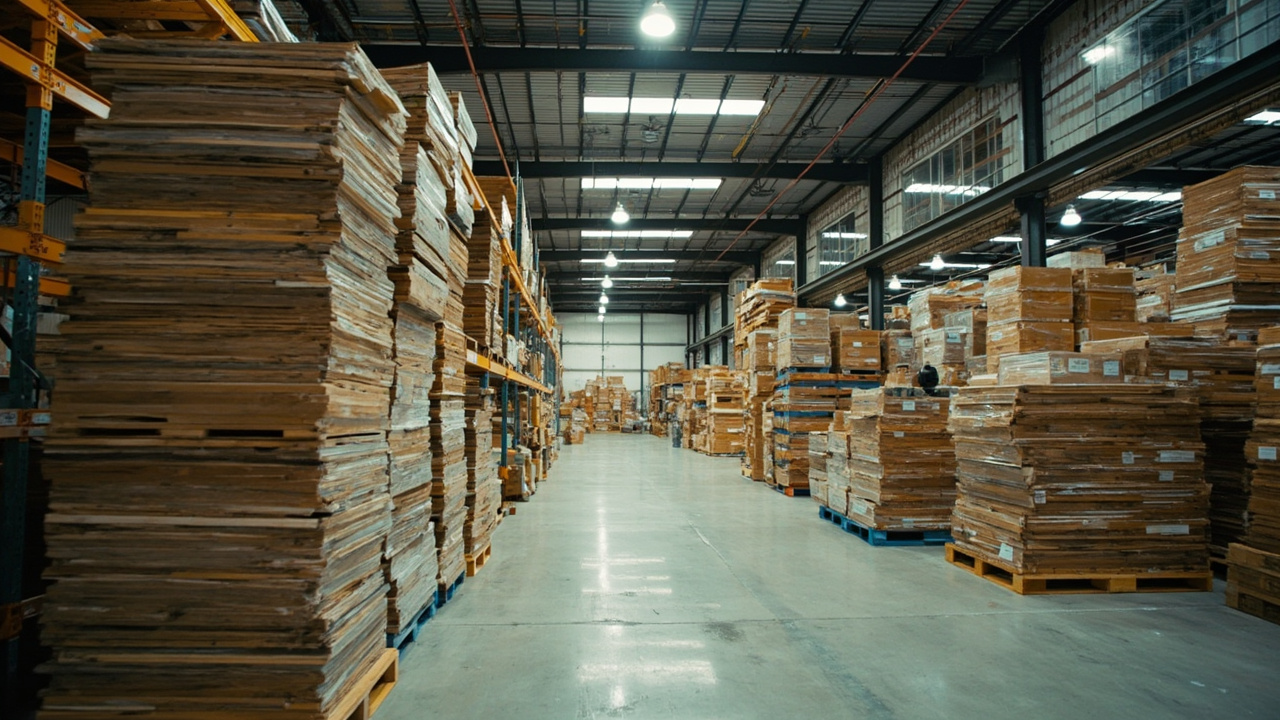
Gypsum board is the workhorse of interior fit-out, used for walls, ceilings, partitions and feature linings across almost every residential, hospitality and commercial project. China is one of the largest gypsum board producers in the world, and the country runs both vast high-speed lines for the volume market and smaller specialty lines for fire-rated and acoustic board. The gap between a competent factory and a marginal one shows up at the job site in three ways: a board that crumbles at the cut edge, a paper face that delaminates under joint compound, and a moisture-resistant board that grows mould anyway. This guide covers the board grades, the thickness and paper specifications, and the factory brief that delivers a clean install.
Standard, moisture-resistant, fire-rated and acoustic
Gypsum board is sorted into four functional grades, and the right grade for each room is the single most important specification. Standard grey board is the choice for dry living areas and ceilings; it is cheap, easy to cut and the basis of most volume work. Moisture-resistant board, identifiable by its green paper face, is the right pick for bathrooms, kitchens and any wall exposed to humidity; the core is treated with a water-repellent additive and the paper is heavier, but a common mistake is using it inside a wet shower where only a cement board belongs. Fire-rated board, in pink or red, contains glass fibres in the core that hold the board together under fire for a rated time (typically 45 to 120 minutes depending on the layer build), and is the mandatory choice for fire-rated partition assemblies and protected escape routes. Acoustic board, with a denser core and sometimes a perforated face, is tuned to absorb sound and is the choice for home cinemas, conference rooms and hotel rooms that share a wall.
Thickness, paper quality and edge type
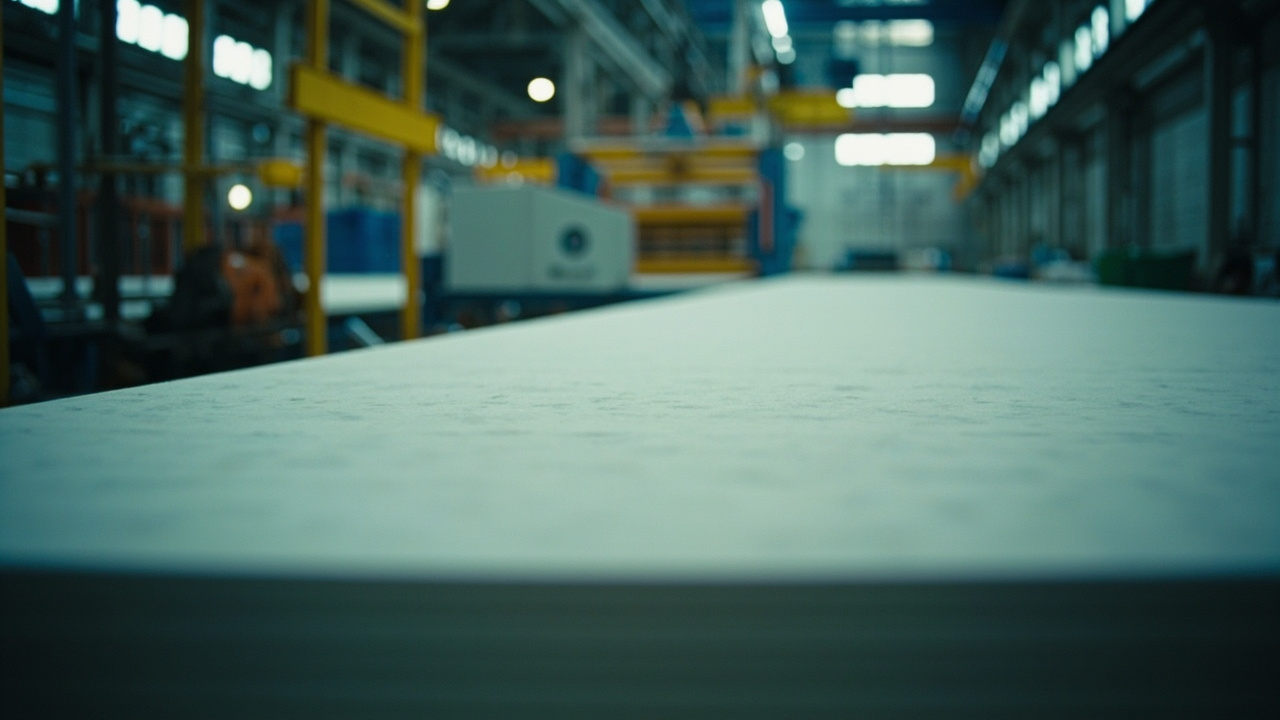
Within each grade three specifications separate a project-grade board from a budget one. The thickness sets the stiffness and the fire rating; 9.5 millimetres (3/8 inch) is the thin choice for curved feature walls, 12.5 millimetres (1/2 inch) is the residential standard, and 15 millimetres (5/8 inch) is the commercial and fire-rated standard that resists impact and adds fire minutes. The paper quality is the second key spec: a heavier ivory face paper takes joint compound without fuzzing and a heavier back paper resists the delamination that happens when a board is dragged across a damp slab; ask the factory for the paper weight in grams per square metre, where 220 to 250 gsm is the project standard. The edge type is the small detail that decides the joint finish: a tapered edge (a shallow recess along the long edge) lets the joint tape and compound sit flush, while a square edge demands a heavier skim and is the cheap choice for non-taped ceilings.
Production capacity, packing and breakage
Gypsum board is fragile in transit, and a long export journey breaks boards that a domestic delivery would not, so the packing and the production line quality together decide the breakage rate. A high-speed modern line runs a smoother, denser and straighter board with a tighter thickness tolerance; an older line runs a softer board with thickness variation that shows up as a wavy wall under raking light. Ask the factory for the production line brand and the line speed, and confirm the board thickness tolerance, where plus or minus 0.5 millimetre is the project standard. For packing, a competent factory loads two boards face-to-face and back-to-back in pairs (to protect the paper faces), stacks the pairs on a timber pallet with board protectors at each corner, and shrink-wraps the whole pallet with a moisture barrier. Confirm the pallet dimensions and the pallet weight before you book the container, because a pallet of 15 millimetre board is heavy and the floor load on the truck and the container both have limits.
Briefing the factory and locking the order
Send your shortlisted three factories the same brief: the project type (residential, hospitality, commercial), the room use and the board grade per room, the thickness, the edge type, the sheet size (the export standard is 2400 by 1200 millimetres, though 1220 by 2440 and 1830 by 1220 also appear), the project country for certification, and the approximate square metres. Ask for a paid sample of one full sheet of each specified grade, plus the test certificate for the fire-rated board (the fire test report from a recognised laboratory). When the sample arrives, check four things: the measured thickness against the claimed size with a caliper at three points, the paper adhesion under a peel test, the core density and uniformity at a cut edge (a soft or crumbly core is a red flag), and the colour match between the sample and the catalogue, because the colour of the paper face is the project-wide visual reference. Negotiate on the pallet pack and the spare ratio: a factory that includes 2 percent spare sheets covers site breakage without holding up the install, and a moisture-barrier shrink wrap on every pallet is the small detail that keeps a container of board from sweating in transit.
The right gypsum board manufacturer for a project is the one whose board grade, thickness, paper quality and packing match the project use and the shipping distance. The ten factories in this category cover the full spectrum from volume standard board to specialty fire-rated and acoustic products, so the buyer job is to match the room-by-room specification to the factory specialism, then validate the grade and the thickness with a paid sample and a fire test certificate before the bulk order.