





Tile Slip Resistance Ratings Explained: R9 to R13 and DCOF Values
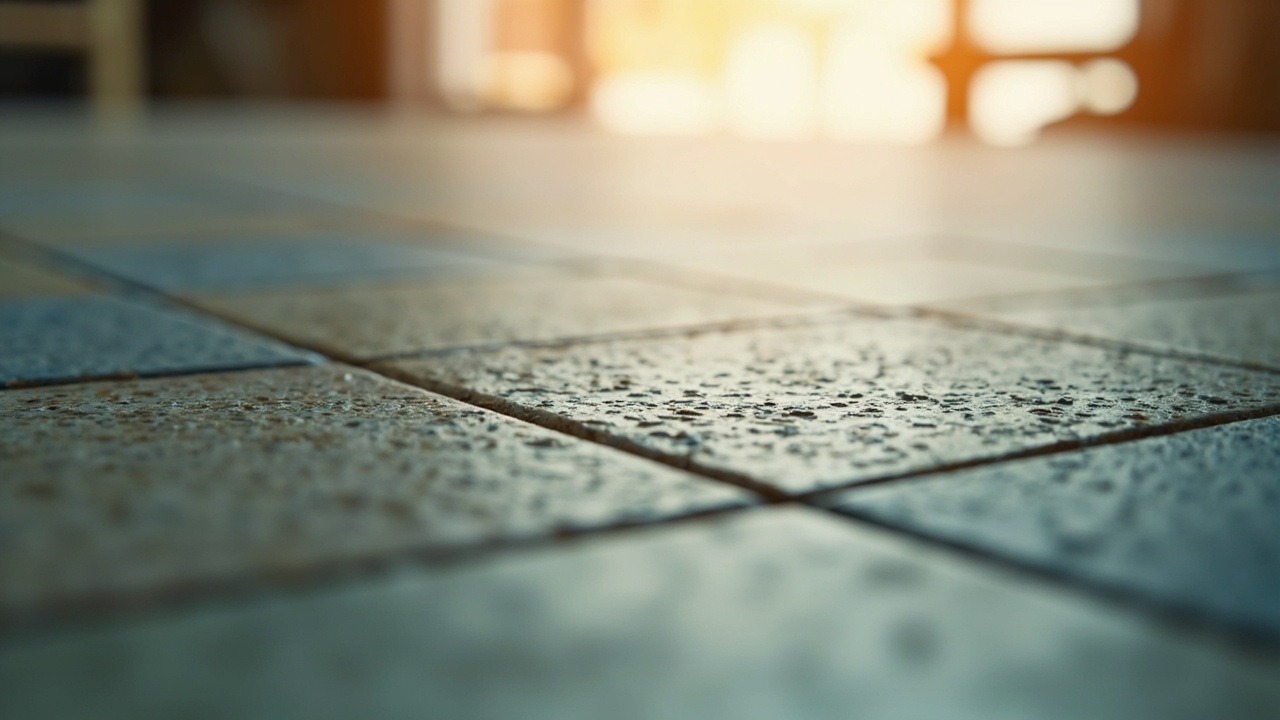
Slip resistance is the only tile performance number that can land a project in court. A polished porcelain floor that looks flawless in the showroom can become a legal liability the first time a guest walks across it in wet shoes. Yet slip resistance is also the specification that buyers most often leave to the factory to decide, because the rating systems are confusing and the test methods sound technical. This guide unpacks the three rating systems you will encounter when sourcing tiles from China, and translates them into the simple question a project buyer actually needs to answer: which rating do I need for each room?
The R-rating: the German ramp test from R9 to R13
The most common slip resistance system in international tile trade is the German DIN 51130 ramp test, which produces an R-value from R9 to R13. A barefoot tester walks backwards down a lubricated ramp coated with engine oil, and the angle at which the tester slips defines the rating. R9 covers angles up to 10 degrees and is the lowest acceptable rating for dry interior floors such as living rooms and offices. R10 covers up to 19 degrees and is the baseline for bathrooms, hotel corridors and residential kitchens. R11 (up to 27 degrees) is needed for commercial kitchens, laundry rooms and covered outdoor areas. R12 and R13 are reserved for specialist industrial applications such as abattoirs and factories where oil and grease are constant. The single most common mistake is specifying R9 for a bathroom floor, which is technically legal in many codes but functionally unsafe when wet.
The DCOF value: the American standard
The American alternative to the R-rating is the Dynamic Coefficient of Friction (DCOF) test, measured by a robot dragging a soft rubber slider across a wet tile surface. The result is a single number between 0.30 and 0.80, where higher is more slip-resistant. Since 2012 the American National Standards Institute has set a minimum DCOF of 0.42 for level interior floors expected to be walked on wet, which covers almost every commercial bathroom, hotel lobby entrance and kitchen. Tiles tested to DCOF 0.42 are roughly equivalent to the European R10 category, and a DCOF of 0.60 corresponds to roughly R11. When a Chinese factory quotes a slip rating, confirm whether the number is an R-value or a DCOF value, because mixing the two systems leads to specification errors that only surface after installation.
The barefoot rating: A, B and C for wet barefoot areas
A separate German standard, DIN 51097, covers areas where users walk barefoot on wet surfaces: showers, swimming pool decks, spa floors and changing rooms. It produces a three-class rating, A, B and C, tested on a soap-lubricated ramp with a barefoot operator. Class A is the minimum for showers and shallow pool surrounds. Class B is required for pool decks, jacuzzi steps and most wet spa areas. Class C is reserved for steeply sloped pool edges and water park ramps where a fall would be catastrophic. A tile can carry both an R-rating and a barefoot rating, but the two are not interchangeable: an R10 floor tile is not automatically Class A for a shower, because the test conditions are different. For any project with a pool or spa, specify the barefoot rating explicitly in writing.
Which rating you need, room by room
Translating the three systems into a project specification is easier than it looks. For dry interior floors such as living rooms, offices and bedrooms, R9 or a DCOF around 0.40 is sufficient. For residential bathrooms, hotel corridors and kitchens, specify R10 or DCOF 0.42 minimum. For commercial bathrooms, public lobbies, entrances and covered walkways, target R10 with a textured surface or R11. For commercial kitchens, dishwashing areas and laundry rooms, R11 is the safe baseline. For outdoor patios, balconies and pool decks, use R11 with a barefoot Class B rating. For pool ramps, water slides and steep outdoor steps, move to R12 or Class C. These are not legal minima in every jurisdiction, but they are the conservative targets that experienced project buyers specify to avoid slip-and-fall claims.
Specifying, testing and verifying the rating
When you write the purchase order, state the required rating explicitly and require the factory to supply a third-party test report from a recognised laboratory such as Intertek, SGS or the German TUV. The test report should identify the exact tile model, the test method used and the numeric result. Insist on a pre-shipment slip test on the production batch, because a glossy glaze applied to a different body can change the slip behaviour dramatically even when the tile looks identical to the approved sample. If the destination market is the United States, ask for a DCOF report; if it is Europe, the Middle East or Southeast Asia, ask for the DIN R-rating and barefoot class. A factory that cannot produce a current test report is one that has not measured the property it is selling, and that is exactly the factory that produces the tile at the centre of a slip-and-fall lawsuit.
Slip resistance is a specification that costs nothing extra to write into the purchase order and a great deal of money to ignore. Choose the rating system that matches your destination market, specify the correct class for each room, demand a third-party test report on the production batch, and the tile you import will look good and perform safely for the full life of the project.