





Sintered Stone Sourcing Guide: Neolith-Style Surfaces from Chinese Factories
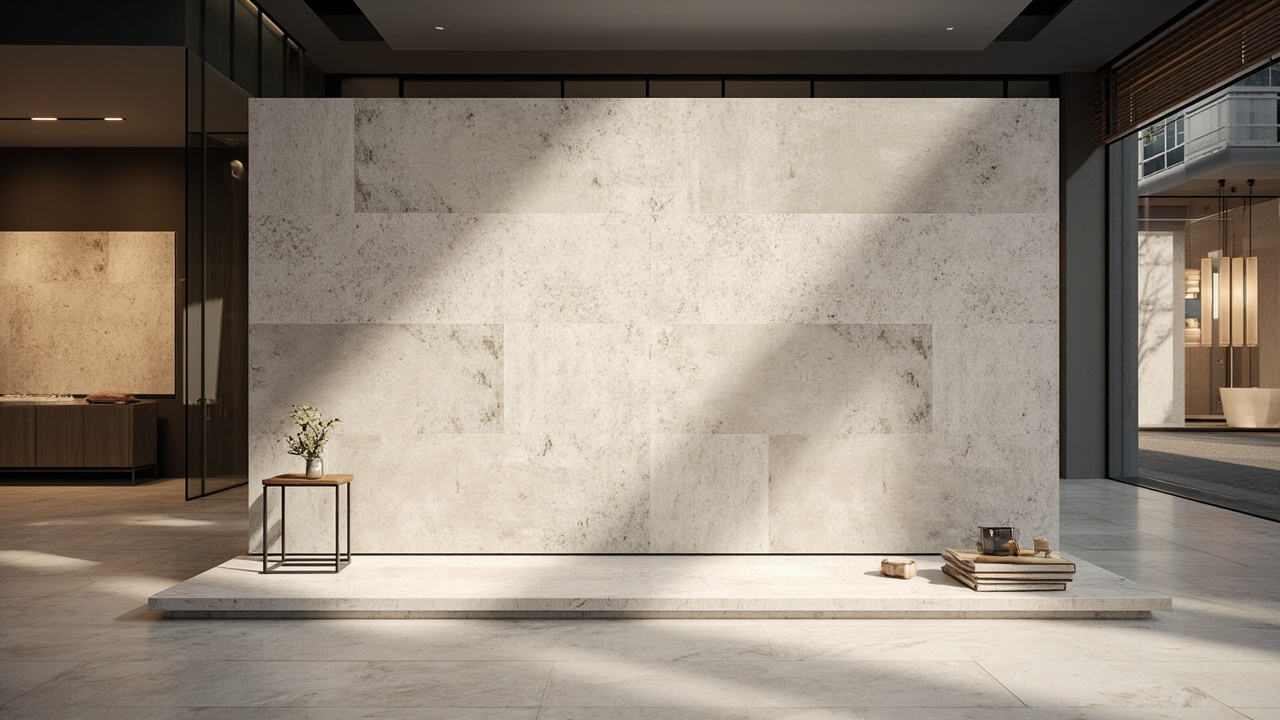
Sintered stone is the surface material that confuses buyers more than any other, partly because the marketing literature overuses the word "sintered" and partly because genuine sintered stone sits at a price point that invites imitations. The material deserves its reputation: it is harder than granite, more heat-resistant than ceramic, UV-stable where engineered quartz yellows, and large enough in slab size to clad a full wall in a single piece. The challenge for the project buyer is telling a real sintered slab from a pressed porcelain tile dressed up in the same vocabulary.
How sintered stone is actually made
Genuine sintered stone begins as a blend of natural minerals — feldspar, quartz, clay, kaolin and natural pigments — pressed at thousands of tonnes per square metre and then fired at over 1200 degrees Celsius in a kiln tens of metres long. The heat fuses the minerals together without any resin binder, which is the key distinction from engineered quartz: there is no polyester to burn, yellow or etch. The process is closer to porcelain than to quartz, but the pressure and temperature are higher, the firing time longer, and the slab larger. A real sintered line requires a press of at least 10000 tonnes and a kiln budget in the tens of millions of dollars, which is why only a small number of Chinese factories — concentrated in Foshan and Quanzhou — produce the material credibly. When a supplier quotes a sintered slab at half the market price, ask which press made it; if the answer is vague, the slab is probably a high-density porcelain masquerading under the sintered label.
Slab sizes, thicknesses and the cutting question
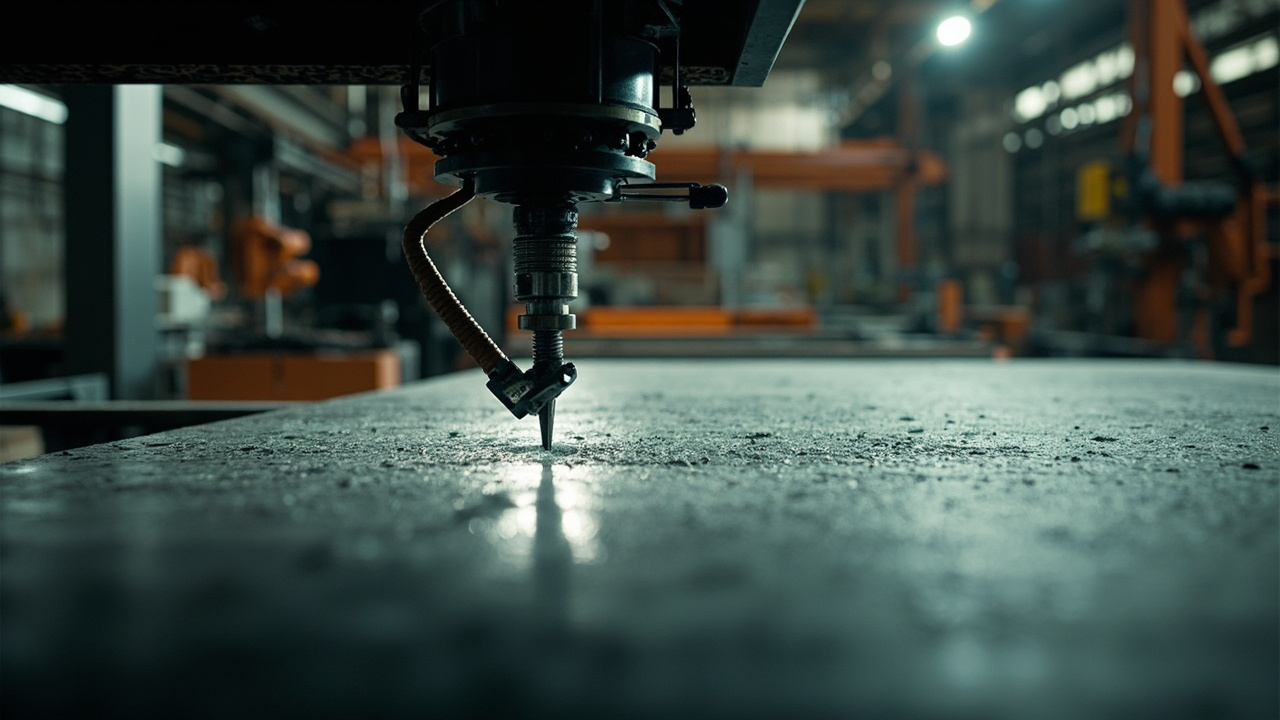
The defining feature of sintered stone is its size. Standard slabs measure 3200 by 1600 millimetres, large enough for a kitchen island in one piece with no seam; premium formats reach 1600 by 3200 and beyond. Thickness options are 3 millimetres for wall cladding and furniture wraps, 6 millimetres for vanities and lightweight countertops, and 12 millimetres for heavy-duty kitchen counters and flooring. The thinner the slab, the more specialised the fabricator required: a 3-millimetre sheet cannot be cut with a standard bridge saw, it needs a CNC router with a sintered-specific diamond blade and water cooling, and the breakage rate during fabrication is high for any team that has not worked with the material before. For project buyers, this means sourcing not just the slab but a fabricator or a factory with in-house CNC capability, since shipping pre-cut tops from China is often cheaper than cutting locally.
Performance: where sintered beats everything else
The performance case for sintered stone rests on three numbers that no other surface matches at the same time. Scratch resistance sits at 7 to 8 on the Mohs scale, equal to or above granite, so a knife will not mark it. Heat tolerance is effectively unlimited for domestic use: a hot pan straight from a 250-degree oven can sit on the surface indefinitely without scorching, which engineered quartz cannot match. UV stability means sintered stone does not yellow in direct sunlight, which makes it the correct choice for outdoor kitchens, sun-drenched lobbies and any south-facing facade. Stain resistance is near-total because the surface is non-porous and requires no sealing, unlike marble and granite. The one weakness is impact: sintered stone is brittle, and a heavy cast-iron pot dropped from counter height will chip or crack it, where a quartz counter might dent but not break.
Price versus quartz, and choosing the right factory
Sintered stone costs more than engineered quartz, often twice as much per square metre for a comparable colour. Standard colours from Chinese factories sit in the range of 80 to 150 US dollars per square metre for 12-millimetre slabs, while full-body premium patterns can reach 250 dollars or more. Against natural marble at the high end, sintered stone is competitive, and against granite it is more expensive but offers superior performance and consistency. When selecting a factory, the qualification questions are concrete: which press tonnage does the factory use, what is the maximum slab size it can produce, does it hold a third-party test report for flexural strength and frost resistance, and can it supply reference projects with the slab in service for at least three years. A factory that cannot answer these questions is a trading company reselling someone else's production, and the buyer should price the risk of inconsistent quality and late delivery into the deal. The smart approach for a first sintered order is to source a sample panel, test it with a hot pan, a knife and a red wine spill, and only commit to a full container once the panel survives all three.
Sintered stone is the future of hard surfaces in hospitality and high-end residential, but only when sourced from a factory that actually owns the press. Treat the slab size, the thickness and the press tonnage as the three non-negotiable questions, test the sample the way a chef would abuse it, and the sintered stone from a Chinese factory will deliver a surface that outlasts the lease on the building.