





Quartz Slab vs Natural Stone Countertop: Engineered or Natural for Your Project
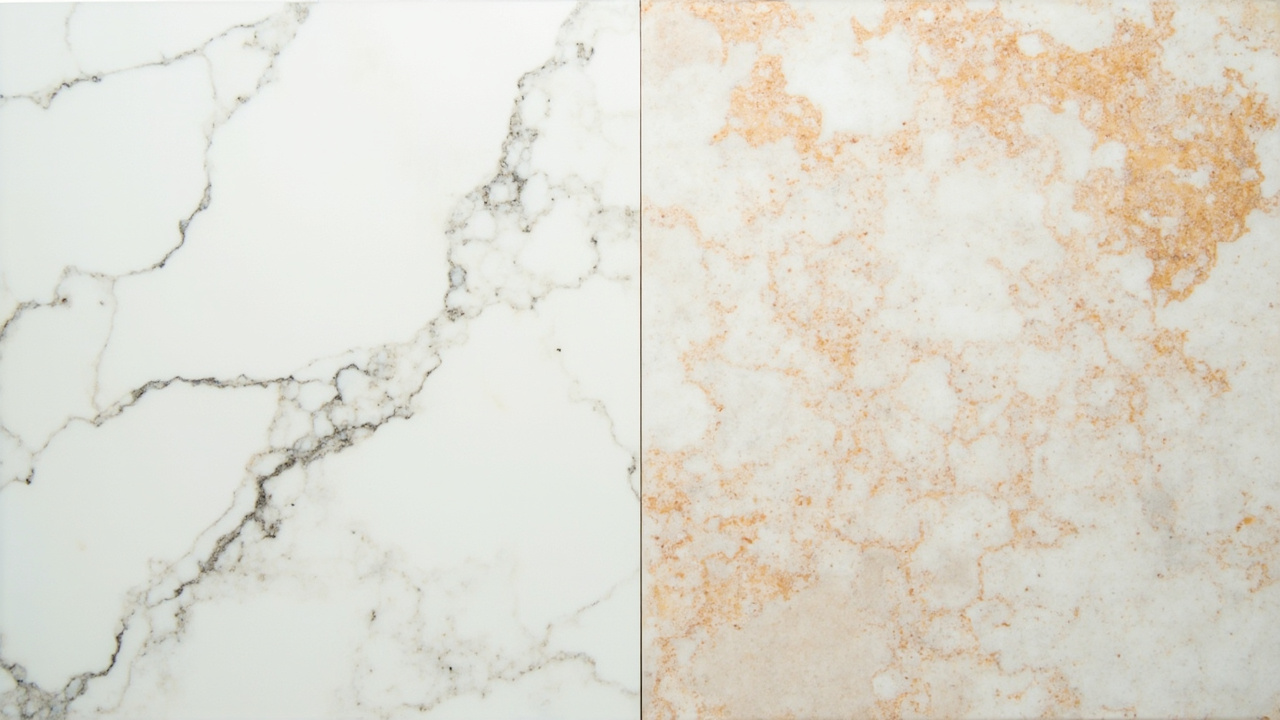
Ask any project buyer to choose between a quartz slab and a natural stone countertop and the answer usually depends on which magazine they read last. The real decision is not aesthetic but functional: each material is engineered by nature or by factory to solve a specific set of problems, and the wrong choice turns a beautiful showroom sample into a maintenance headache within two years. The honest comparison looks at five measurable behaviours rather than at marketing brochures.
What the two materials actually are
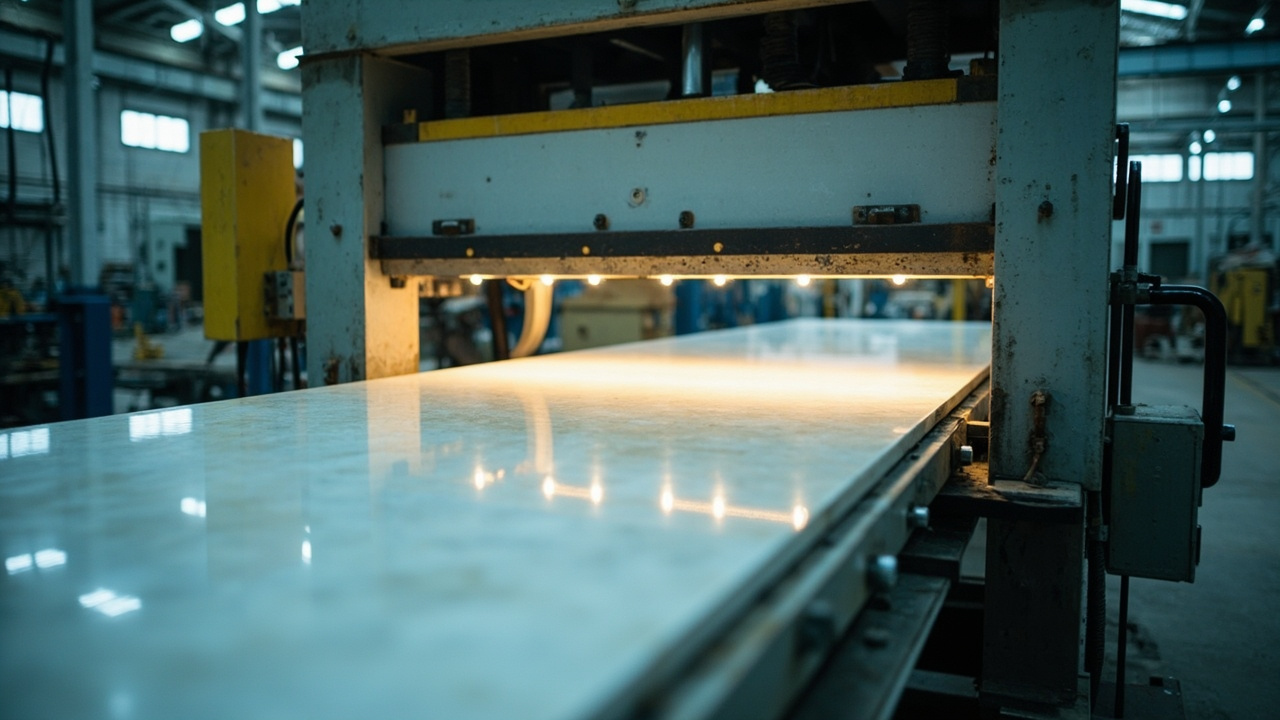
Engineered quartz is roughly ninety percent crushed natural quartz bound with ten percent polyester resin and pigment, vibro-compacted under vacuum into a dense, non-porous slab. Natural stone — marble, granite, soapstone — is cut straight from a quarry block, polished and shipped with whatever veins, pores and mineral structure the earth gave it. The manufacturing difference drives every performance difference that follows: quartz is consistent, stone is unique; quartz is non-porous, stone must be sealed; quartz can be matched across a hundred hotel rooms, stone cannot.
Scratch, stain and heat behaviour
On the Mohs hardness scale, quartz sits at seven, the same as natural quartz, so both quartz slabs and granite resist everyday scratches from knives and keys. Marble is softer, at three to four, and will etch and scratch under normal kitchen use — which is why a marble vanity looks romantic in a boutique hotel but ages badly in a family kitchen. Staining tells a different story. Engineered quartz is non-porous and resists wine, oil, coffee and turmeric without any sealer; marble and granite are porous and must be resealed every six to twelve months, or a single spilled glass of red wine leaves a permanent shadow. Heat is the one category where natural stone wins: granite tolerates a hot pan placed directly from the stove, while the resin in engineered quartz will scorch and discolour above 150 degrees Celsius. The practical rule is to specify trivets for any quartz countertop, regardless of what the brochure claims.
UV yellowing, seams and consistency
The polyester resin that binds engineered quartz is sensitive to ultraviolet light, and a quartz slab exposed to direct sun through a window will yellow visibly within two to three years. This rules out engineered quartz for outdoor kitchens, sunny conservatories and any window sill that faces south; for those applications a UV-stable granite or a porcelain slab is the safer choice. Seam visibility is the second hidden issue. Because engineered quartz is manufactured in controlled patterns, two adjacent slabs can be colour-matched at the factory and the seam across a large island almost disappears. Natural marble, by contrast, has vein patterns that stop abruptly at a seam, so every joint in a marble counter becomes a visible line. For a project that needs forty identical countertops, engineered quartz delivers consistency that no quarry can match.
Price, sourcing from China, and the verdict
On price, engineered quartz from China now sits between thirty and sixty US dollars per square metre for a standard colour, while premium Calacatta quartz patterns reach ninety to one hundred and twenty dollars. Natural marble ranges from sixty dollars for a domestic Crema Marfil to over three hundred for Italian Calacatta, and the price swings with each block. China is the world's largest producer of engineered quartz, with mature clusters in Yunfu and Xiamen that can deliver consistent large-quantity orders; sourcing natural marble from China is also viable, but the buyer must accept that block origin (Turkish, Chinese, Italian) affects both price and pattern. The verdict is not one of superiority but of fit: choose engineered quartz for high-traffic kitchens, hotel bathrooms and any project that values consistency and low maintenance; choose natural marble for feature walls, low-traffic vanity tops and spaces where the uniqueness of the vein is the whole point. Granite remains the compromise — heat-proof, hard-wearing and priced between the two — for buyers who want a natural material without marble's fragility.
No countertop material is the best at everything. The smart project buyer matches the material to the application: non-porous engineered quartz where stains and consistency matter, sealed natural stone where heat and character matter, and granite where the budget demands a natural surface that does both. Treat the choice as a functional specification, not an aesthetic preference, and the countertop will still look right on the five-hundredth guest as it did on the first.