





Kitchen Cabinet Countertop Materials Guide: Quartz, Granite, Marble and Sintered Stone
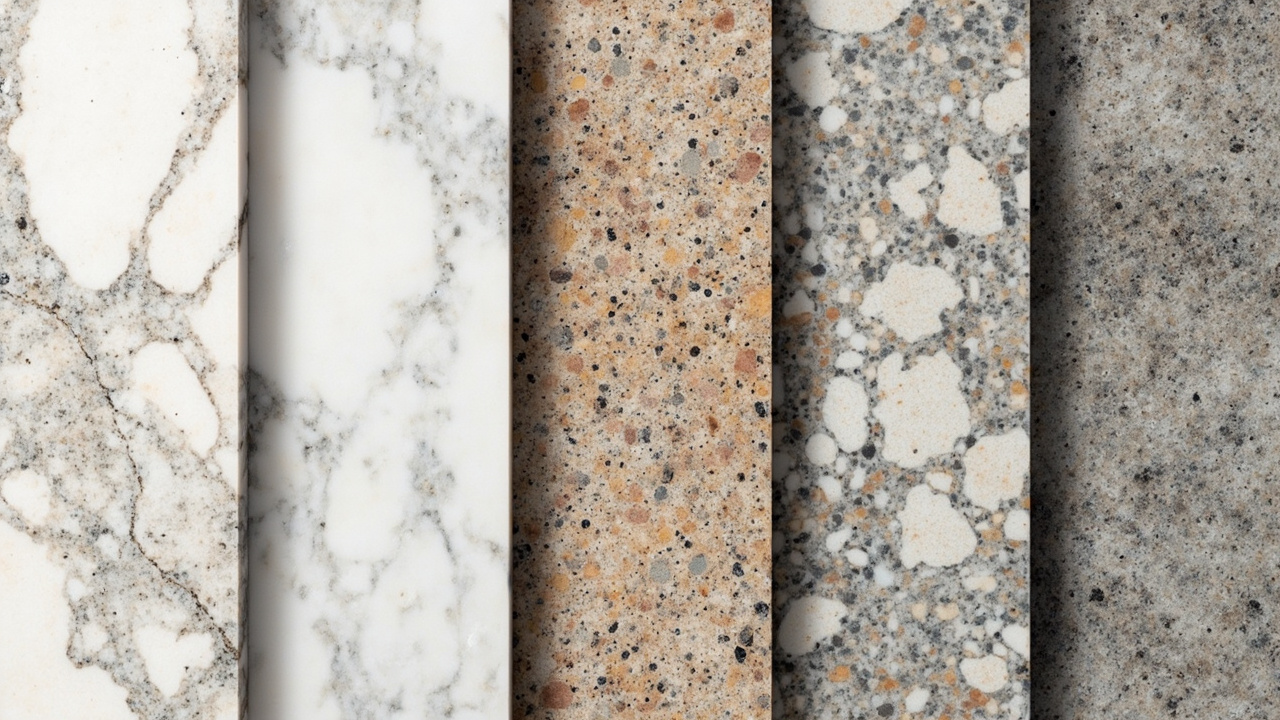
The countertop is the surface a kitchen is judged by. It takes hot pans, knife edges, lemon juice, red wine and daily cleaning, all while setting the visual tone of the room. For project buyers, the choice between quartz, granite, marble and sintered stone is never just about looks; it is about matching a material to a use pattern, a climate and a budget. This guide compares the four most sourced countertop materials on the metrics that actually decide whether a project runs smoothly or generates complaints after handover.
Quartz: the engineered all-rounder
Engineered quartz is roughly 90 to 95 percent ground natural quartz bound with polymer resin and pigments. The result is a non-porous surface that never needs sealing, resists staining from oil, turmeric and coffee, and is available in consistent slabs up to about 3.2 metres long. Its weakness is heat: a pan straight off the burner at over 150 degrees Celsius can crack the resin, so trivets are mandatory. China is now the largest producer of engineered quartz in the world, and the best factories offer Breton-style pressing lines, Calacatta and Carrara vein patterns, and consistent colour matching across multiple slabs for a single project.
Granite: the heat-resistant natural option
Granite is an igneous rock, which means it was formed under heat and pressure, so it shrugs off hot pans better than any engineered surface. A sealed granite countertop resists staining well, though it does require resealing every one to two years because the stone is naturally porous. Each slab is geologically unique, so colour and grain cannot be perfectly matched across a large project. For buyers who want a natural material with strong thermal performance for heavy cooking kitchens, granite remains a solid choice, and Chinese quarries supply popular shades such as Baltic Brown, Black Galaxy and G603 at competitive export prices.
Marble: beauty that demands behaviour
Marble offers a depth of veining and a luminous surface that no engineered material fully replicates, which is why it remains the signature of luxury kitchens and pastry stations. The trade-off is chemistry: marble is calcium carbonate, etched instantly by anything acidic. A splash of lemon or vinegar leaves a dull mark that no sealer prevents, only reduces. For a hotel lobby show kitchen or a display counter rarely used for real cooking, marble is defensible. For a family residence or a serviced apartment where cooking is daily, marble becomes a maintenance burden and we usually steer clients toward quartz with a marble-look vein instead.
Sintered stone: the new premium contender
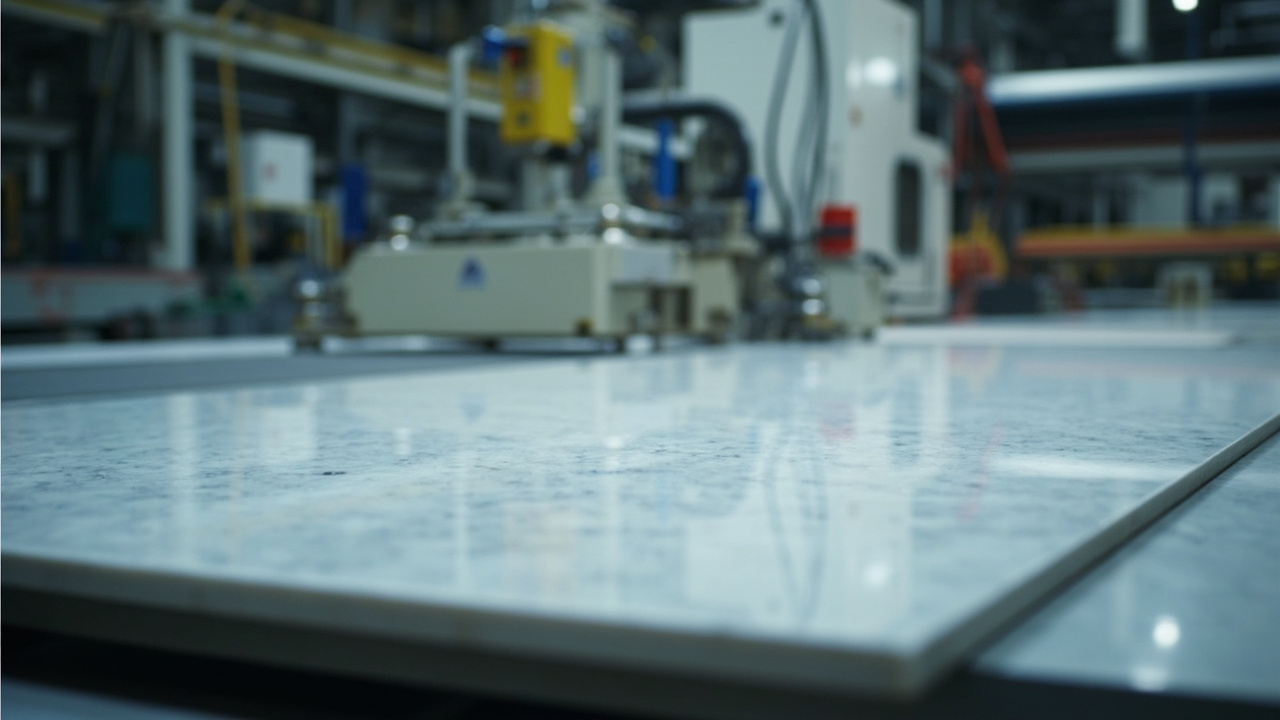
Sintered stone, made by compacting mineral powders under extreme heat and pressure to simulate natural petrification, combines the best properties of the other three. It is non-porous like quartz, heatproof like granite, and available in large-format slabs up to 3.2 by 1.6 metres with realistic marble, stone and metal effects. It can be used for countertops, wall cladding and even outdoor kitchens. The price is higher than engineered quartz, and fabrication is harder: only certified fabricators with specialised tooling should cut it, or chipping occurs. Chinese producers have closed the quality gap with European brands rapidly, making sintered stone an increasingly attractive specification for high-end projects at a controlled cost.
What to check when sourcing slabs from China
Regardless of material, ask the supplier for a current SGS or Intertek test report covering flexural strength, water absorption and abrasion resistance. Insist on full slab photos before shipment, not just sample chips, because vein continuity across slabs is critical for book-matched installations. Confirm the slab thickness tolerance, typically 20mm plus or minus 0.5mm for export grade, and request A-grade resin treatment on the back of natural stone to reinforce hidden fissures. For project consistency, order all slabs for one location in a single production batch, and book a pre-shipment inspection that checks dimensions, flatness, polish quality and the number of usable slabs per crate.
There is no universal winner among countertop materials, only the right match for the job. Quartz dominates mid-market projects for its consistency and stain resistance, granite earns its place in serious cooking kitchens, marble belongs where appearance outweighs practical use, and sintered stone is the rising choice for premium schemes that need performance and large-format beauty in one surface.