





Importing Artificial Stone Basins from China: Sintered and Resin Composite Sinks
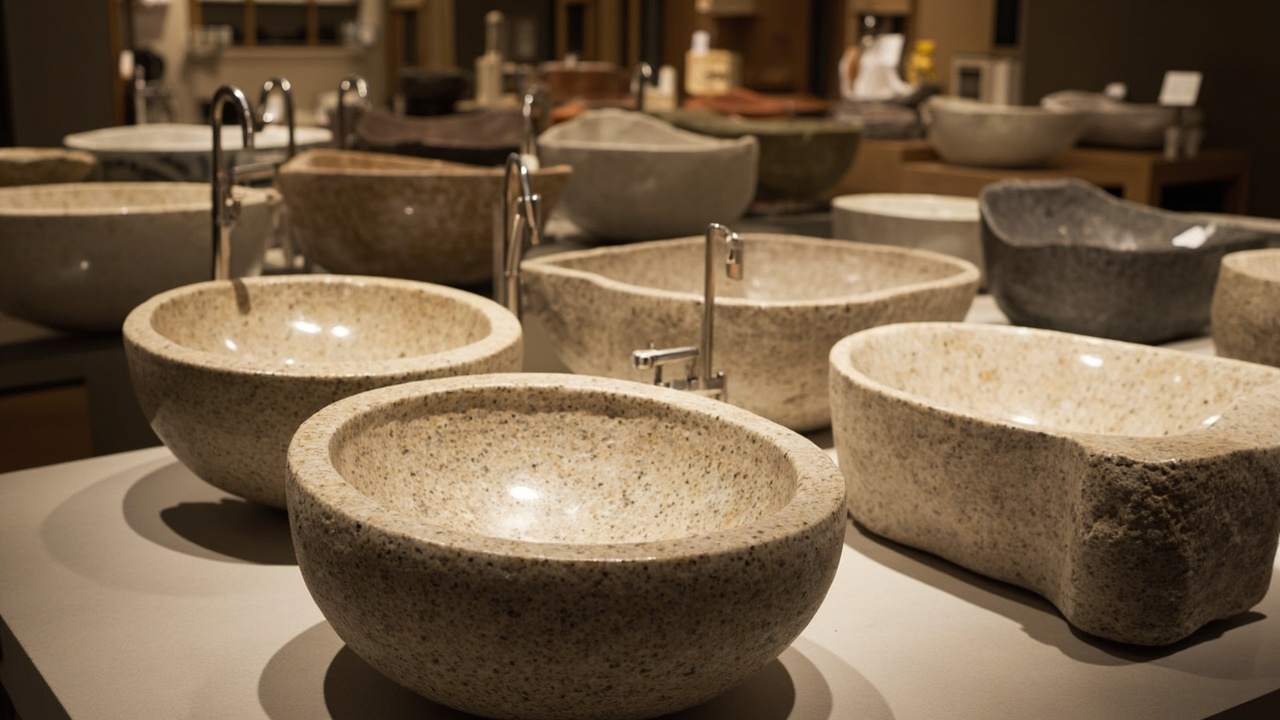
Artificial stone basins have become the default choice for boutique hotels, premium apartments and showpiece residential bathrooms because they pair seamless organic shapes with practical surface performance. China supplies the great majority of these basins worldwide, but the category covers three very different technologies that look almost identical in a product photo. Choosing the wrong one turns a showroom sample into a warranty headache within two years. This guide explains what separates a basin that ages well from one that does not.
Three technologies, one look
The first technology is sintered stone, pressed and fired at over 1200 degrees Celsius from mineral powders. It is the hardest, most scratch-resistant and most UV-stable option, and the only one that genuinely behaves like natural stone. The second is resin composite, typically acrylic or polyester resin loaded with mineral filler, moulded at room temperature. It is warmer to the touch, easier to repair and available in any curved shape. The third is gel-coated fibreglass, the cheapest option, where a thin pigmented gel coat covers a glass-fibre shell; it is acceptable for low-traffic hospitality rooms but unsuitable for residential master bathrooms.

Performance specs that actually matter
Three test figures separate a real specification from marketing language. The first is scratch resistance, measured by the Mohs scale: sintered stone should reach 6 to 7, resin composite typically reaches 3 to 4. The second is thermal shock resistance, which determines whether a basin cracks when boiling water meets a cold surface; a basin rated to ISO 10545 tolerates repeated cycles between boiling and ice water without fissuring. The third is yellowing resistance, tested under a QUV lamp for 500 hours; resin composites with poor UV stabilisers shift noticeably yellow, which ruins a white bathroom scheme within two years. Ask the factory for these reports before placing a sample order.
Drain matching and installation geometry
The single most common cause of after-sales complaints is drain mismatch, and it is entirely preventable. Artificial stone basins almost always use a pop-up or click-clack drain with a specific thread size and overflow geometry, and these fittings are usually supplied with the basin rather than sourced separately. Confirm the drain thread matches your local plumbing fixtures, because a 1.25-inch Chinese thread will not accept a European bottle trap. For countertop basins, verify the tap reach matches the basin radius so that water lands in the centre, not on the rim, where it splashes onto the surface and causes staining over time.
Packing fragile cargo and protecting the claim
Artificial stone basins are heavy, rigid and brittle, which makes them vulnerable to corner impacts in transit. A responsible factory packs each basin in an expanded polystyrene cradle, then a five-layer corrugated carton, then stacks no more than four cartons per pallet with corner boards and shrink wrap. Insist on drop-test photographs and request that the production batch number is marked on each carton; if a claim is needed, the batch number links the damage to a specific firing or moulding run and shortens the claim process from months to weeks. An FCL shipment is strongly recommended, because LCL consolidation exposes heavy stone cartons to crushing from neighbouring freight.
The right artificial stone basin combines engineering data with sound logistics. Request the test reports, approve a physical sample, specify the drain hardware in writing and demand export-grade packing, and the basins that arrive on site will look the same on day one and day one thousand.