





How to Import Ceramic Tiles from China: From Sample to Container
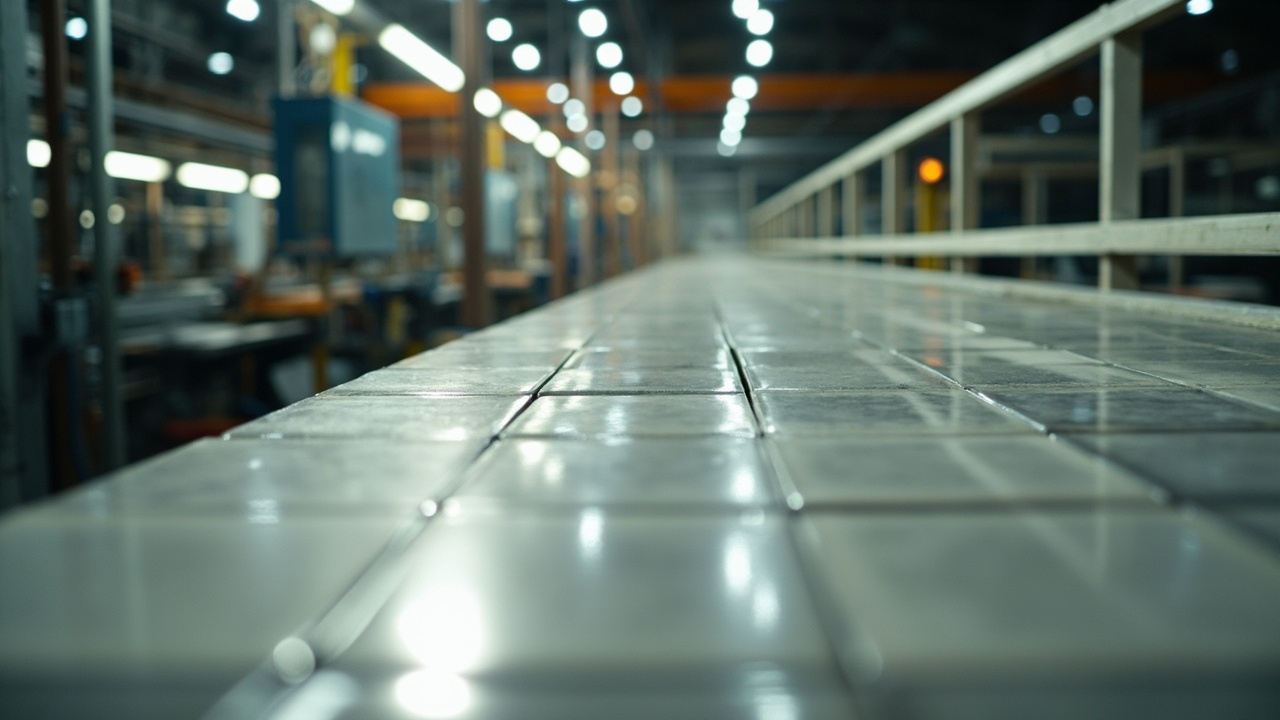
Ceramic tiles are among the most reliable building materials to source from China, but only when the buyer treats the order as a managed process rather than a catalogue purchase. Unlike cabinets or sanitaryware, tiles are heavy, fragile and shipped by the square metre, which means every decision from sample selection to container loading has a direct effect on the landed cost and the breakage rate. This guide walks through the workflow that experienced project buyers follow to bring a full container of ceramic tiles from a Chinese factory to the job site in good condition and on schedule.
Step 1 — Sample evaluation before any price discussion
The first mistake new buyers make is to ask for a price before they have held the tile in their hand. Order at least three physical samples from each candidate factory, then compare them side by side under natural daylight and under indoor lighting. Check four things: the flatness of the tile (place two samples face to face to detect warping), the consistency of glaze colour across the three pieces, the dimensional tolerance with a caliper, and the surface quality under a raking light that reveals pinholes and glaze defects. A factory whose free samples show variation within the same batch is signalling trouble at scale.
Step 2 — Minimum order quantity and price tiers
Chinese ceramic factories quote a minimum order quantity that usually reflects a single kiln run, often around 500 to 1000 square metres for a standard size. Below that volume, the factory either refuses the order or charges a small-batch premium of 15 to 25 percent. Once you exceed one container, price breaks appear at predictable thresholds: the second container, the fifth container and the tenth. Negotiate the price ladder upfront in writing, and ask whether the quoted price includes inner cartons, pallets and fumigation-treated timber where required by your destination port. A tile that looks cheap on the quote can become expensive when packaging is added as a line item later.
Step 3 — Production monitoring and the inspection window
Ceramic tile production runs in cycles of pressing, glazing and firing that take roughly 15 to 25 days for a standard order. During production, request dated progress photographs at three points: the raw clay body after pressing, the glazed tiles before firing, and the sorted tiles after kiln exit. The critical inspection happens when roughly 80 percent of the order is packed. Hire a third-party inspector to check water absorption rate, dimensional deviation against the ISO 10545 standard, glaze quality, shade consistency within the lot and the warpage rate. Reject any lot where the shade number on the carton does not match the sample you approved, because mixing shade numbers across a floor produces visible colour bands that no installer can hide.
Step 4 — FCL versus LCL and the case for full containers
Tiles should almost always ship as full container loads (FCL). The reason is breakage. In a shared container (LCL), your pallets sit next to lighter goods that shift during three weeks at sea, and the handling at the consolidation warehouse adds extra forklift moves that crack cartons. A dedicated 20-foot container holds roughly 25 tonnes of tile, and a 40-foot container holds about 27 tonnes because the weight limit, not the volume, is the constraint. Work with a freight forwarder who understands building materials and can quote FOB Shenzhen or Foshan to your nearest port, plus inland haulage to the site.
Step 5 — Packing, loading and breakage prevention
The way tiles are packed decides how many arrive in one piece. Acceptable packing for a 600-by-600 millimetre tile uses foam corner protectors, vertical packing in cartons of four to six pieces, then strapping the cartons onto a wooden pallet wrapped in stretch film. Refuse horizontal packing, where tiles lie flat on top of each other, because the bottom tiles carry the weight of the entire stack and crack under road vibration. During container loading, insist that pallets are loaded tightly against the container walls and chocked with timber bracing so nothing can shift. Take photographs of the loaded container and the container seal number before the doors close.
A well-managed ceramic tile import lands at roughly 40 to 60 percent of the retail price in most destination markets, with a breakage rate below one percent when the packing and loading steps are supervised. The keys are an approved physical sample, a written price ladder, a pre-shipment inspection against ISO 10545, and a full container loaded tightly enough to survive the sea voyage intact.