





Custom vs Stock Kitchen Cabinets from China: Lead Time, Price and MOQ
Every kitchen sourcing project eventually sits at the same fork in the road: buy custom-made cabinets tailored to the exact layout, or order stock cabinets from an existing catalogue and adapt the design to fit. The two paths use different factories, different production calendars and different pricing logic, and the wrong choice can either blow a budget or blow a deadline. This guide compares custom and stock cabinets from Chinese suppliers across the four metrics that actually drive a sourcing decision: lead time, minimum order quantity, price per linear metre and design freedom. Understanding where each format wins makes the choice far simpler than it first appears.
Lead time and production rhythm
Stock cabinets are produced in continuous runs against a forecast, so a supplier with healthy inventory can ship within 7 to 15 days of order confirmation. Custom cabinets follow a project calendar: after the layout, drawings and samples are approved, the factory schedules materials, opens a production line and dedicates workers to that order. The realistic custom lead time from a Chinese factory is 35 to 60 days depending on finish complexity and the season, with the pre-Chinese New Year rush pushing the upper end even higher. For a project with a fixed handover date, this calendar gap is often the deciding factor on its own. If the deadline cannot move, stock or semi-stock is the only viable path; if the schedule has eight to ten weeks of slack, custom becomes practical.
Minimum order quantity and entry cost
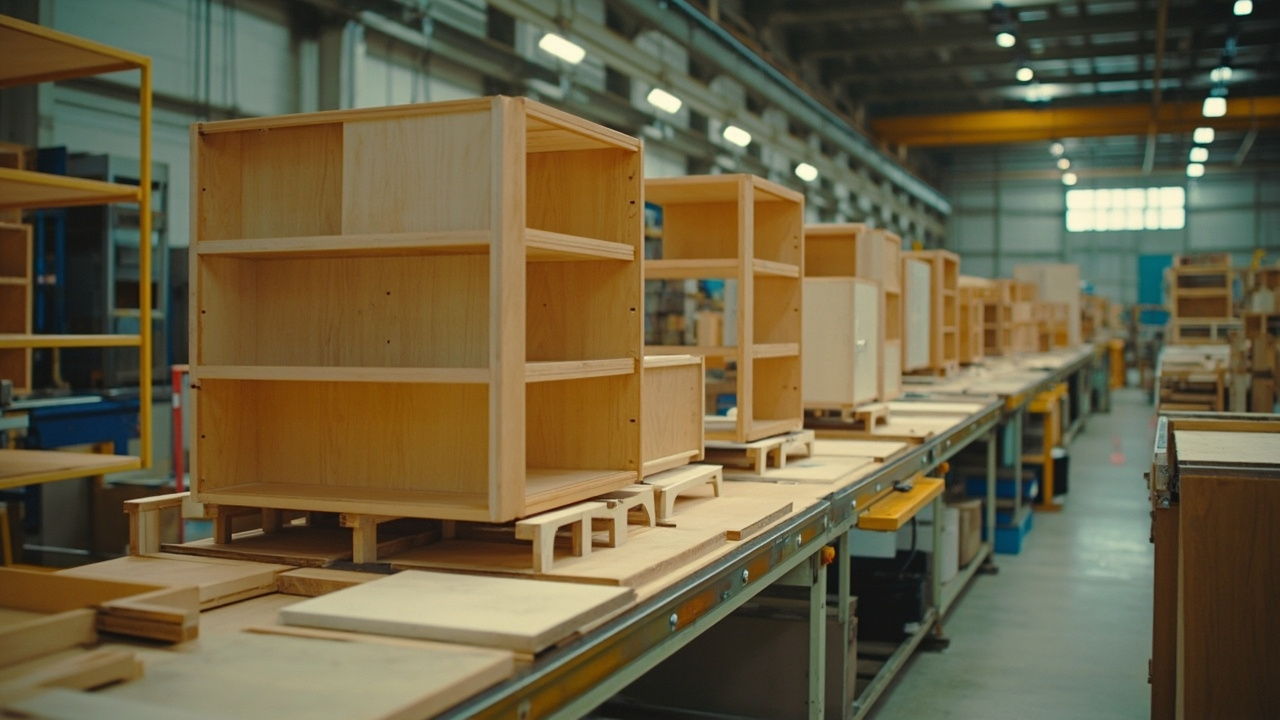
Stock cabinets are sold by the unit or the set, so a buyer can order a single kitchen without negotiation. Custom production requires the factory to set up tooling, cutting lists and finishing protocols specific to one project, which only pays at a meaningful volume. The typical custom MOQ from a serious Chinese manufacturer sits between 10 and 50 sets for a single design, and below that number the per-unit price rises sharply because fixed setup costs spread over fewer units. For a single residence or a small boutique development, stock is usually the only affordable entry point. For a multi-unit residential tower ordering 80 identical kitchens, the MOQ is met naturally and custom becomes the economical choice.
Price per linear metre and total cost
At low volume, stock cabinets are cheaper per linear metre because the buyer benefits from the supplier scale and carries none of the setup cost. As volume rises, the picture flips. A custom run of fifty or more kitchens typically lands 15 to 30 percent below a comparable stock price per metre, because the factory removes the catalogue margin, buys materials to size and runs a single optimised cutting list. Custom also opens savings on packing and freight, since cartons are made to the actual panel dimensions rather than generic catalogue sizes. The honest comparison must include hidden stock costs too: filler panels, modification labour on site, and wasted material when standard sizes do not fit the actual walls.
Design freedom and project fit
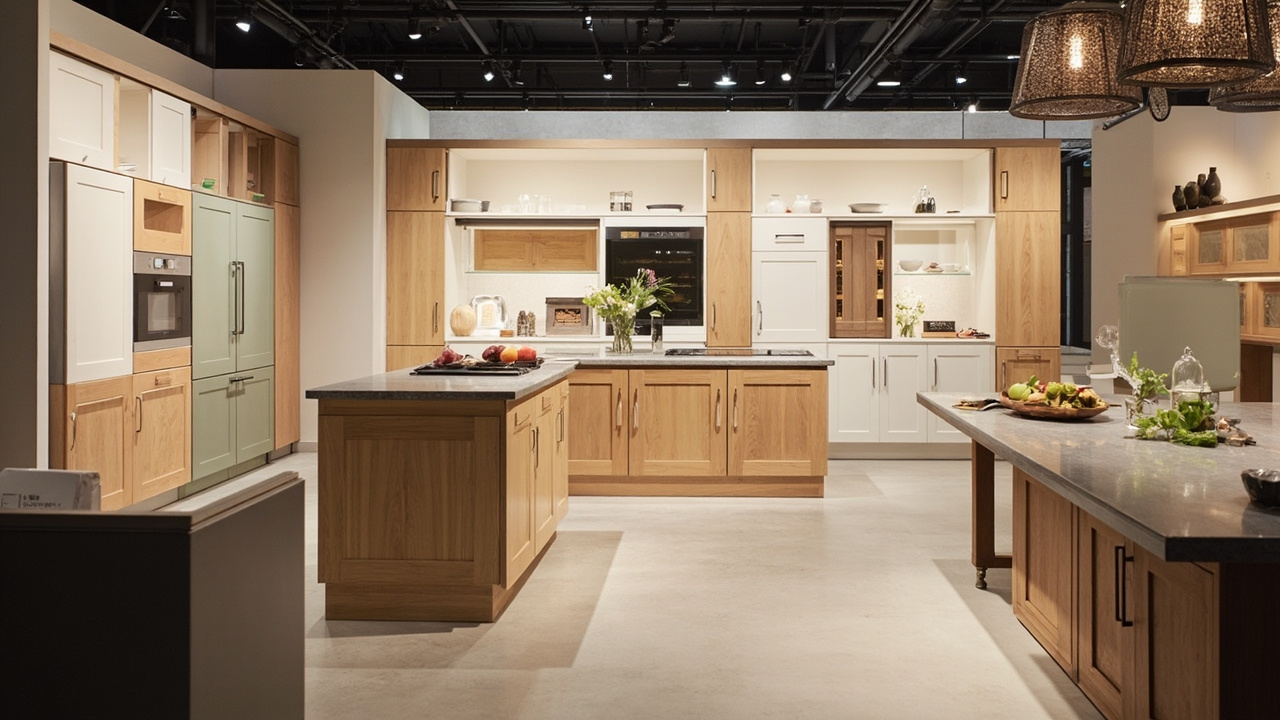
Custom cabinets are built to the exact dimensions, colour, finish and internal configuration the project requires. Drawer layouts can be tuned to specific storage needs, tall units can wrap around structural columns, and door styles can follow a designer intent that no catalogue contains. Stock cabinets force the design to conform to fixed widths, usually in 150 or 300 millimetre increments, with a finite palette of finishes and a fixed selection of internal fittings. For architecturally distinctive projects or branded schemes with a strict design language, custom is the only route that delivers. For straightforward rental apartments, hotels with a standard fit-out, or phased developments where speed matters more than uniqueness, stock does the job perfectly well.
The right answer for most professional buyers is not a single choice but a deliberate split. Use stock cabinets for the repeatable, dimensionally standard kitchens where speed and unit price win, and reserve custom runs for feature units, show apartments, or areas where the design genuinely cannot be served from a catalogue. This hybrid approach captures the scale economics of stock and the tailored fit of custom, and it keeps both the budget and the schedule under control. The deciding question is always the same: which format serves the handover date and the design intent at the lowest real cost?