






Color Difference Tolerance in Building Materials: Delta E and Batch Consistency

Of all the quality issues that derail a building material order, none is more common, more stubborn or more subjective than colour. Two batches of supposedly identical white lacquered cabinet doors can look right under factory fluorescent light and clash glaringly once installed in a sunlit kitchen. The disagreement that follows, between buyer who sees the mismatch and factory that insists the colour is within tolerance, is the single most frequent cause of claims in this industry. This guide explains how colour difference is actually measured, what tolerance bands are realistic for each product and how a disciplined master-sample process prevents most disputes before they start.
Delta E and the language of measurable colour
Colour is not a feeling; it is a coordinate. The CIELAB colour space maps any visible colour onto three axes, L for lightness, a for the green-to-red shift and b for the blue-to-yellow shift. Delta E (written dE or ΔE) is the straight-line distance between two points in this space, so a Delta E of one is the smallest colour difference an average human eye can perceive under controlled conditions. The metric converts a subjective argument into a number that buyer and factory can both inspect. A spectrophotometer reads the colour of the sample and the reference, then software reports the Delta E between them, typically broken down into the total value plus the L, a and b components so the direction of the difference is visible.
Tolerance bands that work in practice
Different products carry different realistic tolerances because of how they are made and how they are viewed. Solid surface and quartz countertops, where panels are joined seamlessly in the field, demand the tightest control: a Delta E below 1.5 is the working target, because a visible seam between mismatched slabs is unacceptable. Ceramic and porcelain tiles sit in the middle, with the industry norm around Delta E 3 between production batches of the same shade, though premium calibrated lines push toward 2. Kitchen cabinet doors and lacquered panels typically accept Delta E 2 to 3 within a batch and up to 4 between batches, reflecting the difficulty of matching sprayed lacquer across different spray sessions. Melamine and laminate surfaces, pressed from printed decor paper, can hold Delta E 2 consistently because the print run controls the colour at the source. Anything looser than Delta E 4 in a finished, visible product is usually a sign of weak process control, not an acceptable standard.
Light box evaluation and the metamerism trap
Delta E removes most of the subjectivity, but the eye still matters for catching metamerism, the phenomenon where two samples match under one light source and drift apart under another. A grey cabinet door that matches the reference under factory daylight tubes can look pinkish under warm home LED. The defence is the standard light box, a controlled viewing chamber fitted with D65 (daylight), TL84 (store fluorescent), CWF (cool white) and A (incandescent) light sources. Inspectors place the sample and the reference side by side, view them under each source in turn and record any shift. For products destined for residential or hospitality interiors, evaluation under D65 plus the actual installation lamp (usually 2700K or 3000K LED) is the minimum that prevents post-installation arguments.
Sealing a master sample to anchor every batch
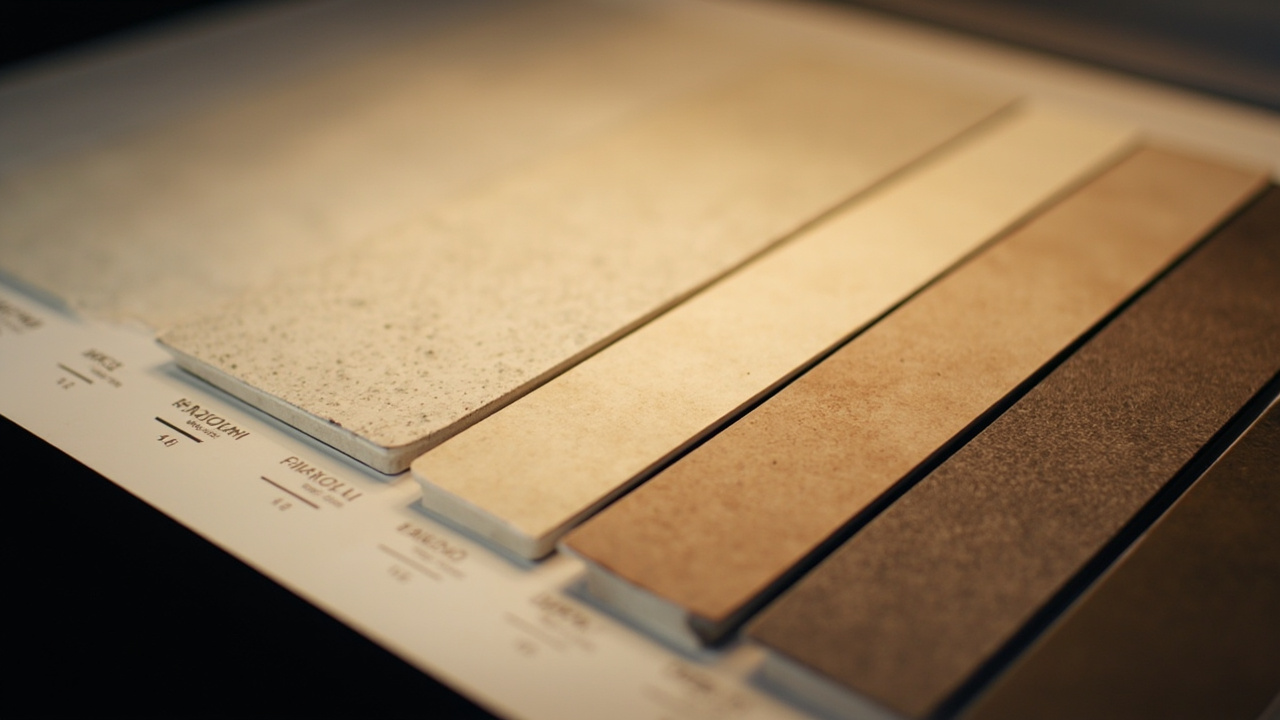
The single most effective control is also the simplest: a physical master sample, signed and dated by both buyer and factory, held by both parties and referenced in the purchase contract. The master is the colour truth. Every production batch is compared against it, by spectrophotometer for the Delta E figure and by eye in the light box for metameric check. The master must be stored away from direct sunlight, sealed in a bag to prevent oxidation and refreshed every twelve to twenty-four months because even stable pigments drift over time. When the factory wants to change the colour slightly to match a new glaze or lacquer batch, the change goes through a formal master re-sealing, never a quiet drift. This discipline converts colour from a moving target into a contractually fixed standard.
Writing the tolerance into the purchase contract
A colour specification buried in email is not enforceable when a batch arrives off-shade. The contract should state the master sample reference, the maximum Delta E allowed within a batch, the maximum between batches, the lighting condition for visual inspection and the instrument model used for measurement. A clause that says "colour to match master sample, Delta E under 3.0 measured by spectrophotometer, evaluated under D65" is short, clear and defensible. Combined with a sealed master and a pre-shipment inspection that includes colour measurement, the buyer has the evidence to demand rework or replacement when a batch falls outside the agreed band, and the factory has a precise target to hit rather than a vague instruction to match a photograph.
Colour difference in building materials is unavoidable at the production level but entirely manageable at the contractual level. By measuring with Delta E, setting realistic tolerances per product, evaluating under the right light sources, sealing a master sample and writing the standard into every purchase order, buyers turn the most subjective quality issue into an objective one. The result is fewer claims, faster approvals and a finished project where the eye sees exactly what the specification promised.