





Building Materials Customs Clearance: HS Codes, Duties and Documents
Customs clearance is the moment a building-material project either glides to a finish or stalls at the dock. A container that clears quickly keeps the project on schedule and keeps cash free; a container held for a misclassified tariff code or a missing certificate can rack up demurrage charges that wipe out the savings from months of careful sourcing. This guide walks through the four things that decide how smoothly a shipment clears: the HS code, the duty calculation, the document set, and the broker who handles it all.
HS codes: the six digits that start everything
Every product entering a country is classified under a Harmonized System, or HS, code. The first six digits are internationally standardised; the remaining digits vary by country and define the product more precisely for that customs authority. Getting the HS code right is not a formality, it determines the duty rate, whether anti-dumping duties apply, which certificates are required, and whether the shipment is selected for inspection. Common starting points for building materials: ceramic tiles fall under 6907, porcelain under 6908 in the legacy structure (many countries now consolidate these under 6907), sanitary ceramics under 6910, kitchen and bedroom furniture of wood under 9403 40 and 9403 50, faucets and taps under 8481, aluminium window frames under 7610. Always confirm the exact subheading with the customs broker in the destination country, because a one-digit difference can change the duty by several percentage points.
Duty rates, preferential agreements and anti-dumping
The duty applied to a shipment is rarely just the standard MFN rate. Many countries have free trade agreements with China that reduce or eliminate duty on qualifying goods, but only when the shipment is accompanied by a valid certificate of origin in the correct form, such as Form E for ASEAN-China, RCEP certificates, or a generic certificate of origin. Anti-dumping duties are the trap that catches unwary importers of tiles, quartz and certain cabinets; these additional duties, sometimes over 100 percent, apply to specific products from specific origins and change frequently. Before placing an order, confirm with the destination customs authority whether anti-dumping applies to your product and origin, and run the total landed duty into your cost model. A product that looks cheap at the factory can become expensive at the border.
The document set that opens the gate
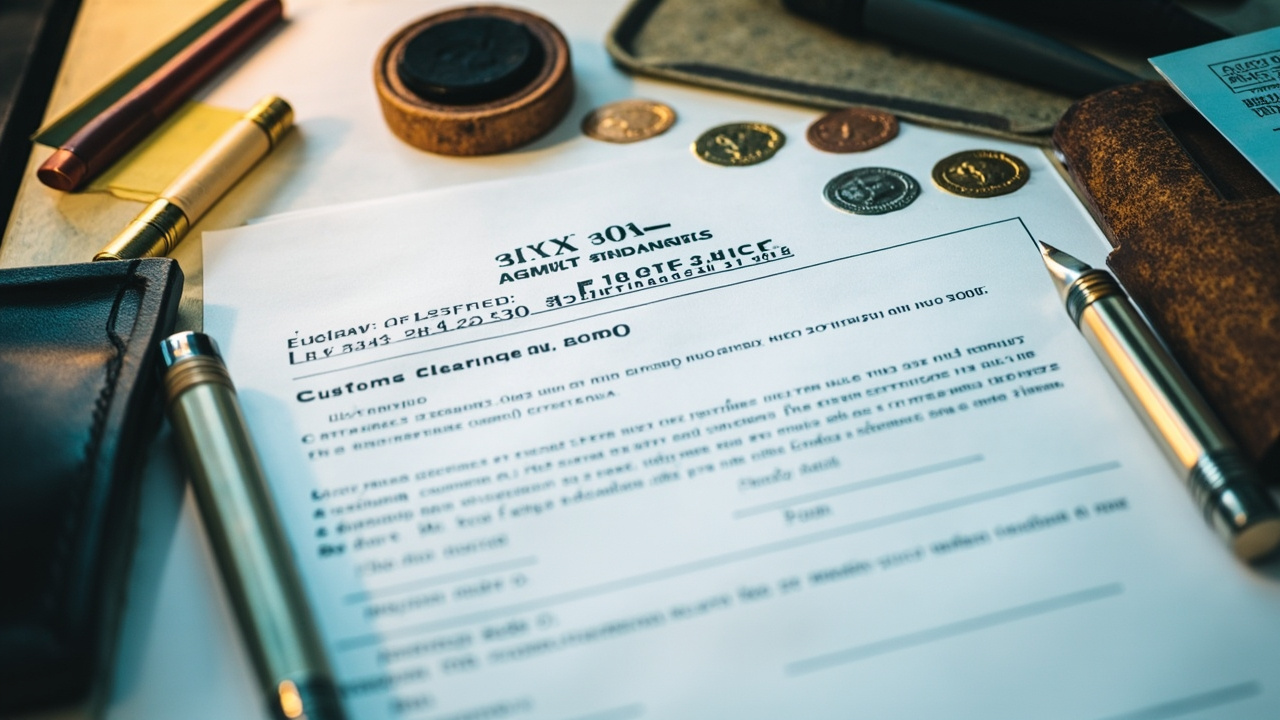
Customs authorities do not clear on intent; they clear on paper. The standard document set for a building-material import comprises the commercial invoice, the packing list, the bill of lading, the certificate of origin, and any product-specific certificates such as a CE declaration for Europe or a fumigation certificate for wooden packaging. The commercial invoice must show a credible transaction value, because customs uses it to compute duty and under-declaration invites seizure or penalties. The packing list must match the actual cargo exactly, carton count, weight, dimensions, item numbers, because any mismatch with the bill of lading or the physical container triggers a hold. For regulated products such as electrical fittings or sanitary ware, the relevant conformity certificate must accompany the entry; its absence is the single most common cause of clearance delay.
Choosing a customs broker who actually knows your goods
The customs broker is the licensed agent who files the entry, pays the duty on behalf of the importer, and interfaces with customs when questions arise. Not every broker is equal. A broker who handles textiles or electronics daily may not know the specific HS nuances of ceramic tiles, the seasonal anti-dumping updates on quartz, or the documentation quirks of wood furniture. For building-material imports, choose a broker with documented experience in the product category, ask for references from other importers of the same goods, and confirm their process for handling exam holds, the physical inspections customs randomly orders. A good broker flags problems before filing; a mediocre broker files and waits to see what customs rejects.
Clearance timelines and the cost of delay
Under normal conditions, a building-material container clears within two to five working days of arrival, assuming documents are complete and duty is paid promptly. Delays fall into a few predictable categories: a misclassified HS code requiring re-entry, a missing or invalid certificate, a value the customs authority disputes, or a random exam that opens the container and inspects the cargo. Each day beyond the free time at the terminal incurs demurrage, often 75 to 200 US dollars per day for a 40-foot container, plus storage and, eventually, the risk of the goods being auctioned if abandoned. Building a buffer of five working days into the project schedule for clearance, and pre-filing documents before the vessel arrives, are the two habits that keep clearance from becoming a budget problem.
Customs clearance rewards preparation and punishes improvisation. The importers who clear fastest are the ones who knew their HS code before they ordered, who confirmed duty and anti-dumping exposure in the cost model, who assembled a complete and consistent document set, and who hired a broker with real experience in their product. Treat clearance as a planned stage of the project, not a hope, and the container that crossed the ocean smoothly will close out just as smoothly at the border.